Geotechnical Soil Investigation plays a crucial role in the planning and construction of safe structures. Before any foundation work begins, it is essential to understand the properties of the soil beneath the surface. Soil conditions directly affect the stability, durability, and safety of buildings, bridges, and other infrastructure projects. Without proper investigation, construction projects risk structural failure, uneven settlement, and costly repairs. Inch-On Materials Testing Laboratory specializes in providing accurate and reliable Geotechnical Soil Investigation services to ensure that every project is built on solid and well-tested ground.
By assessing soil density, consistency, and strength, Geotechnical Soil Investigation provides engineers with the data necessary to design foundations that meet safety standards and regulatory requirements. The Standard Penetration Test (SPT) is one of the most widely used methods in geotechnical studies, offering critical insights into soil characteristics that influence foundation design. Every project benefits from a clear understanding of soil behavior, reducing risk and supporting long-term performance.
What is Geotechnical Soil Investigation?
Geotechnical Soil Investigation refers to the process of evaluating subsurface conditions to determine the properties of soil, rock, and other materials at a construction site. This investigation includes both field and laboratory testing methods to measure soil strength, composition, density, and other key parameters. Construction engineers use this data to design safe and efficient foundations, choose appropriate construction materials, and anticipate potential issues such as soil liquefaction, settlement, or erosion.
The process begins with site assessment, soil sampling, and in-situ testing to gather accurate and representative information. Detailed analysis of the collected data provides engineers with a comprehensive understanding of the site’s soil conditions. Geotechnical Soil Investigation reduces uncertainty, allowing construction teams to make informed decisions that protect the safety and integrity of every project. Ignoring these investigations can result in costly repairs, structural instability, and safety hazards.
Standard Penetration Test (SPT) Explained
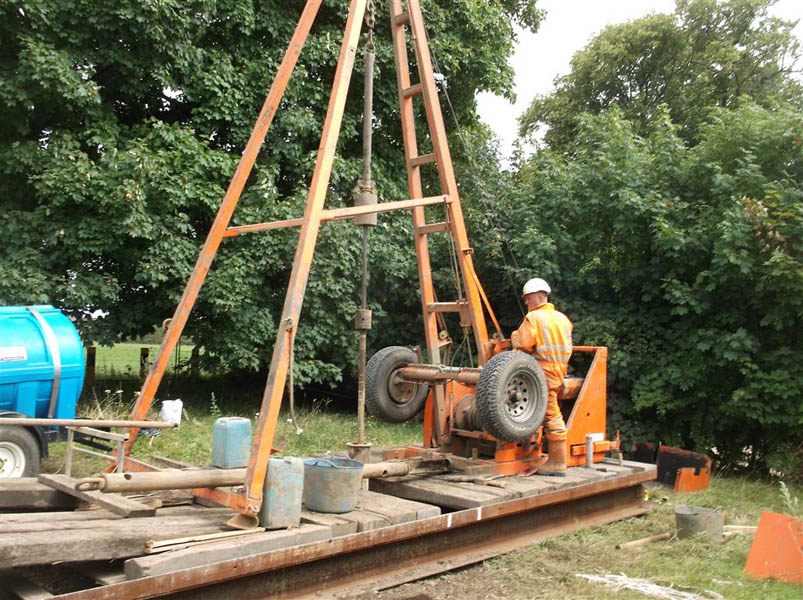
The Standard Penetration Test (SPT) is a core component of Geotechnical Soil Investigation. SPT measures the resistance of soil to penetration, providing critical information about soil density and consistency. During the test, a hollow sampler is driven into the ground using a standardized hammer. The number of blows required to penetrate the soil a certain depth is recorded as the N-value, which indicates soil compactness.
This test is widely used because it provides reliable data for various soil types, including sand, silt, and clay. Engineers use SPT results to determine load-bearing capacity, settlement potential, and the need for ground improvement techniques. SPT is especially valuable for designing foundations, retaining structures, and embankments. By incorporating SPT into Geotechnical Soil Investigation, Inch-On Materials Testing Laboratory ensures that project designs are based on accurate and actionable data.
SPT also allows engineers to classify soil layers and identify areas of weak or unstable soil. Combined with laboratory testing, this test provides a complete picture of subsurface conditions, supporting informed decision-making and reducing construction risks.
Field Testing Services by Inch-On
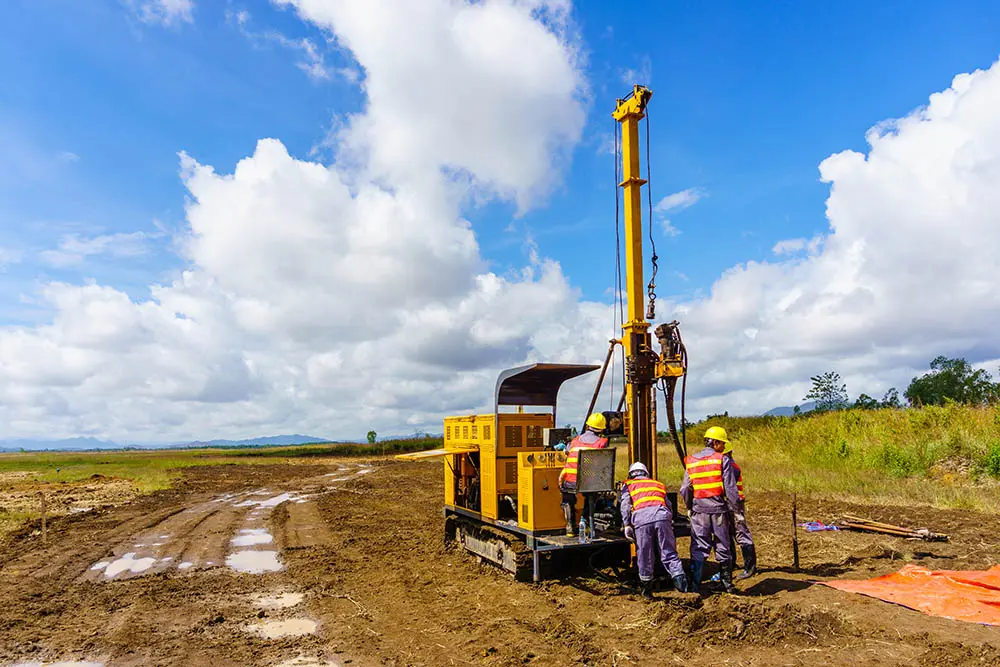
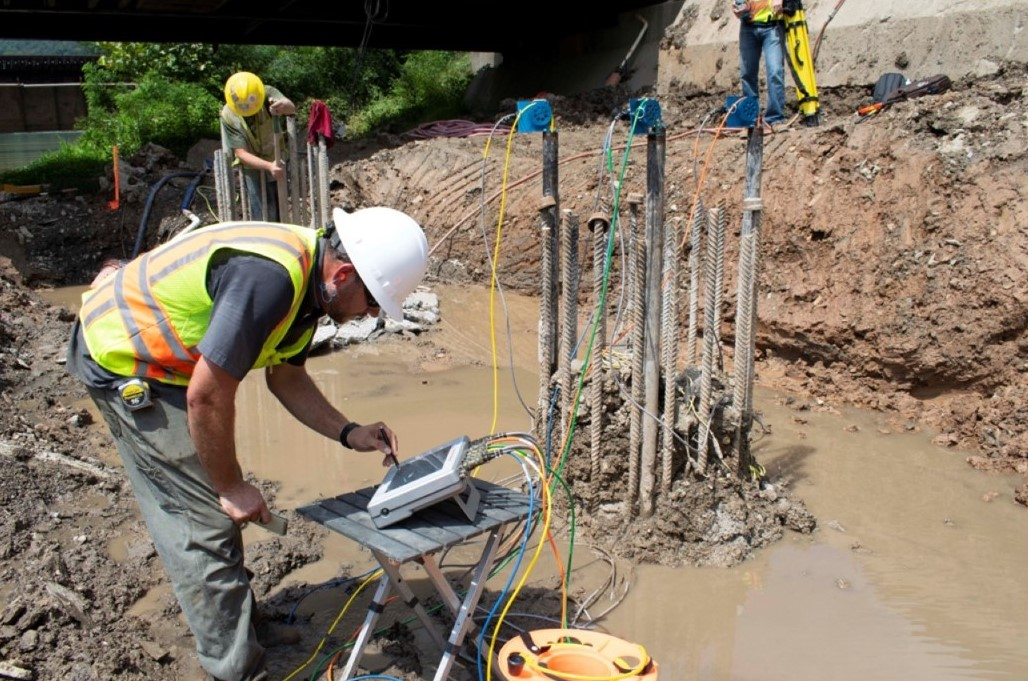
Field testing is an essential part of Geotechnical Soil Investigation, providing real-time data about soil and foundation performance. Inch-On Materials Testing Laboratory conducts on-site evaluation of soil, concrete, and pile foundations using advanced equipment and internationally recognized procedures. Field testing allows engineers to observe soil behavior under actual conditions and verify that materials perform as expected.
Key services offered in field testing include Standard Penetration Tests, cone penetration tests, pile integrity tests, and concrete strength evaluation. Each test follows ASTM and AASHTO standards to ensure reliable results that comply with regulatory requirements. On-site testing helps identify potential issues early in the construction process, allowing for timely adjustments to foundation design or construction methods.
Field testing not only confirms soil properties but also validates laboratory findings. This dual approach strengthens the accuracy of Geotechnical Soil Investigation and reduces uncertainty for engineers and project managers. Real-time assessment of piles and foundations ensures that the constructed foundation aligns with design expectations and performance criteria.
Laboratory Testing Services by Inch-On
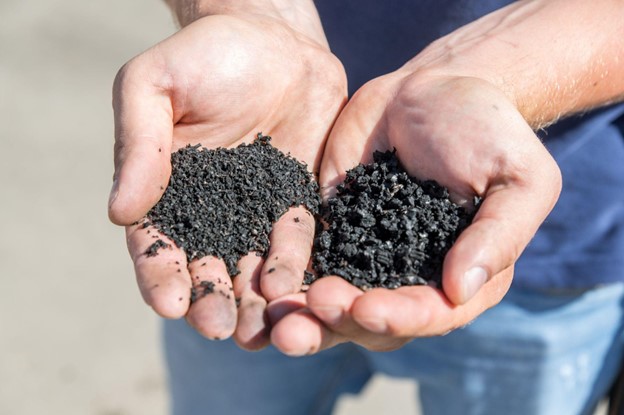
Laboratory testing complements field evaluations in Geotechnical Soil Investigation. After soil samples are collected, laboratory tests determine physical and mechanical properties, such as particle size distribution, Atterberg limits, compaction, and shear strength. Testing construction materials like concrete and aggregates ensures compliance with required specifications and long-term durability.
Inch-On Materials Testing Laboratory uses advanced equipment and standardized procedures to guarantee precise results. Each laboratory analysis provides critical insights into soil behavior, material strength, and construction quality. This information guides engineers in selecting suitable foundation types, optimizing construction techniques, and avoiding potential structural problems.
Laboratory testing also allows for repeated or specialized testing that may not be feasible on-site. By combining field and laboratory testing, Geotechnical Soil Investigation produces a complete and accurate understanding of soil conditions, enhancing safety and reliability for every project.
Why Choose Inch-On Materials Testing Laboratory
Selecting a trusted partner for Geotechnical Soil Investigation ensures accurate and unbiased results. Inch-On Materials Testing Laboratory is a DPWH-BRS accredited facility recognized for its expertise and adherence to international testing standards. Established in 2018, Inch-On provides independent evaluation of soil, concrete, and foundation materials, giving engineers the confidence to proceed with construction safely.
The laboratory’s experienced team uses specialized equipment to conduct both field and laboratory testing, delivering comprehensive reports and actionable recommendations. Compliance with ASTM, AASHTO, and DPWH-BRS standards ensures that every project meets regulatory requirements and industry best practices. Choosing Inch-On for Geotechnical Soil Investigation guarantees reliable data, quality results, and professional support for foundation design and construction.
Benefits of Geotechnical Soil Investigation
Conducting Geotechnical Soil Investigation provides multiple advantages for construction projects. It minimizes the risk of foundation failure, supports efficient and cost-effective design, and improves long-term durability. Engineers can identify weak soil layers, evaluate the need for ground improvement, and plan foundations that accommodate soil variability.
This type of investigation also ensures compliance with safety regulations and industry standards. By identifying potential risks early, construction teams can avoid delays, cost overruns, and safety hazards. Reliable data from Geotechnical Soil Investigation enables better material selection, reduces uncertainty, and enhances overall project quality.
Ultimately, the investment in proper soil investigation safeguards the structural integrity of buildings, bridges, and other infrastructure. It ensures that projects perform as intended under various conditions, protecting both occupants and investments.
Takeaway
Geotechnical Soil Investigation is an essential step in every construction project, providing the information necessary to design safe, durable, and reliable foundations. With services from Inch-On Materials Testing Laboratory, engineers and project managers can confidently plan and construct structures with knowledge of soil properties, material quality, and foundation performance. The combination of field testing, laboratory analysis, and professional expertise makes Inch-On a trusted partner for ensuring project safety, compliance, and success.
FAQ About Geotechnical Soil Investigation
What is the purpose of Geotechnical Soil Investigation?
The purpose is to assess subsurface conditions, determine soil properties, and provide data that guides safe and efficient foundation design.
How is a Standard Penetration Test (SPT) performed?
A sampler is driven into the soil using a standardized hammer. The number of blows required to penetrate a specified depth is recorded to determine soil density and consistency.
Why is field testing important?
Field testing provides real-time data about soil behavior and material performance at the project site, validating laboratory results and ensuring construction safety.
What types of laboratory tests are conducted?
Laboratory tests include soil classification, compaction, shear strength, particle size analysis, and evaluation of construction materials like concrete and aggregates.
Who should conduct Geotechnical Soil Investigation?
Accredited laboratories like Inch-On Materials Testing Laboratory, with experienced engineers and specialized equipment, should conduct investigations to ensure reliable and unbiased results.
How does Geotechnical Soil Investigation benefit construction projects?
It reduces the risk of foundation failure, supports efficient design, ensures compliance with safety standards, and provides accurate data for long-term structural performance.