Steel plays a major role across modern construction. Structural frames, reinforcement bars, beams, columns, bridges, industrial facilities, and other structures depend on steel with suitable mechanical properties. Before steel becomes part of a critical construction component, its quality and performance should be verified through appropriate testing procedures.
Destructive steel testing Quezon City provides engineers, contractors, developers, suppliers, and project owners with measurable data about steel behavior under controlled loading. Rather than simply inspecting the appearance of a steel product, destructive testing examines mechanical characteristics such as tensile strength, yield strength, elongation, and ductility through controlled laboratory procedures.
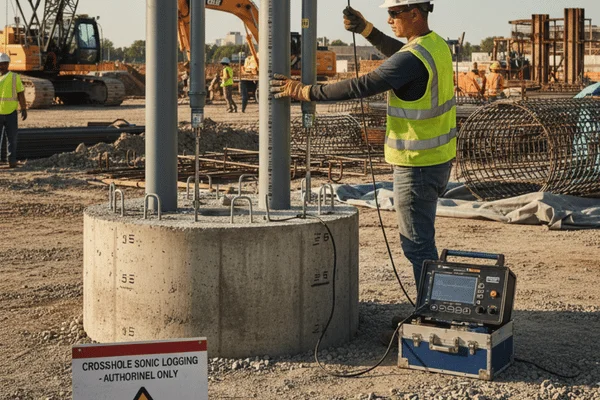
Inch-On Materials Testing Laboratory provides independent construction materials testing services for projects that require reliable material evaluation. Established in November 2018, Inch-On is a DPWH-BRS accredited Engineering and Construction Laboratory. The laboratory conducts testing for soil and construction materials while also providing field evaluation of soil, concrete, and foundation piles using specialized equipment.
With testing procedures based on recognized ASTM and AASHTO standards, Inch-On supports construction teams that need dependable technical information for material quality control, project documentation, and engineering assessment.
What Is Destructive Steel Testing?
Destructive steel testing refers to controlled laboratory testing where a steel specimen is subjected to mechanical force until a specified failure point, deformation condition, or other required endpoint is reached. Since the specimen undergoes permanent deformation or physical damage, it generally cannot return to service after testing.
The purpose of Destructive steel testing Quezon City is to obtain measurable information about the mechanical characteristics of steel. Rather than relying solely on certificates, visual inspection, or manufacturer documentation, engineers can use laboratory test results as additional technical evidence regarding the material being evaluated.
A typical test starts with sample identification and specimen preparation. The specimen must meet the dimensions and preparation requirements associated with the applicable testing method. Laboratory personnel then place the specimen into suitable testing equipment and apply controlled force.
Measurements collected during the procedure can reveal how the steel responds to increasing load. Depending on the selected method, the laboratory may determine yield strength, ultimate tensile strength, elongation, ductility, and other required characteristics.
The specific procedure depends on the steel product, applicable specification, project requirements, and selected ASTM or other recognized testing method.
Why Destructive Steel Testing Matters for Construction Projects
Construction steel must meet requirements established by project specifications, material standards, design documents, or regulatory requirements. A material that appears acceptable through visual inspection may still require mechanical testing to verify its performance characteristics.
Destructive steel testing Quezon City helps construction professionals obtain objective laboratory data that can support material verification and quality-control activities.
Verify Material Quality
Steel products may come from different manufacturers, suppliers, production batches, or material grades. Testing representative samples can provide useful information about the actual mechanical characteristics of a submitted material.
Laboratory results can then be compared with the requirements specified for the project or applicable material standard.
Support Structural Design Requirements
Structural engineers depend on known material properties when developing calculations and evaluating structural components. Yield strength and tensile strength are among the important properties associated with steel performance.
Results from Destructive steel testing Quezon City can provide documented measurements that engineers may review alongside drawings, specifications, certificates, and other project records.
Identify Material Variations
Steel from different batches or sources may require separate verification, particularly when project requirements call for documented testing. Differences may occur due to material grade, production conditions, manufacturing source, or other factors.
Testing representative specimens gives project teams additional information for quality-control decisions.
Support Quality Control
Material testing forms part of a broader construction quality-control program. Steel test results can become part of project documentation used by contractors, engineers, inspectors, developers, and other authorized project personnel.
A documented testing process can also provide useful records when questions arise regarding material compliance.
Common Destructive Tests Performed on Steel
Different steel testing procedures examine different material characteristics. The appropriate method should be selected according to the steel product, project specification, applicable standard, and required engineering information.
Tensile Strength Testing
Tensile testing evaluates how a steel specimen responds when subjected to increasing pulling force. The specimen is placed within suitable laboratory equipment, and force is gradually applied under controlled conditions.
The resulting data may provide information about yield behavior, ultimate tensile strength, elongation, and related characteristics.
For Destructive steel testing Quezon City, tensile testing is particularly relevant when a project requires direct measurement of steel’s mechanical performance.
Yield Strength Testing
Yield strength describes the stress level associated with the onset of significant permanent deformation under a specified testing procedure.
This property is important for structural applications because engineers need reliable information about how steel behaves when subjected to increasing loads.
A laboratory yield strength test provides measured data that can be compared with the requirements applicable to the material being evaluated.
Elongation Testing
Elongation describes the amount of deformation experienced by a steel specimen during tensile testing. It provides useful information about ductility and the material’s capacity to deform before fracture under the applicable test conditions.
A steel product can have high strength while still requiring adequate ductility for its intended application. For this reason, elongation may form part of a broader mechanical testing program.
Bend Testing
Bend testing subjects a steel specimen to controlled bending around a specified configuration. The procedure can provide information about material behavior under bending and may help identify cracking or other unacceptable behavior based on the applicable requirements.
The precise bend procedure depends on the steel product, dimensions, specification, and selected test standard.
Destructive Steel Testing Process at a Materials Testing Laboratory
A structured laboratory process helps maintain sample traceability, accurate measurements, and clear reporting.
Step 1: Sample Submission and Identification
The process starts with submission of the steel sample to the laboratory. Relevant information may include steel type, grade, dimensions, manufacturer, supplier, batch number, heat number, project reference, and other available documentation.
Proper identification helps maintain traceability from sample receipt through final reporting.
Step 2: Specimen Preparation
The submitted material may require preparation before testing. Laboratory personnel prepare specimens according to the requirements of the selected testing method.
Dimensions, shape, surface condition, and other preparation details may affect the test procedure and results, making proper specimen preparation an important part of laboratory work.
Step 3: Equipment Setup
Testing equipment must be prepared according to the selected procedure. Equipment condition, calibration status, test parameters, and specimen placement should be checked before the test begins.
For Destructive steel testing Quezon City, suitable laboratory equipment and controlled procedures help produce reliable measurements.
Step 4: Controlled Mechanical Testing
The prepared specimen is subjected to the required mechanical force. Laboratory personnel monitor the test and record relevant measurements throughout the procedure.
For tensile testing, the force continues until the required endpoint is reached, which may include yielding, ultimate strength, fracture, or another specified condition.
Step 5: Data Analysis
Recorded measurements are reviewed and processed according to the applicable testing procedure. Calculations may include strength values, elongation, or other required characteristics.
Results can then be compared with the relevant project specification or material requirement.
Step 6: Technical Reporting
A laboratory report provides documented test information for authorized project personnel. Depending on the testing requirement, a report may include sample identification, test method, specimen information, measured values, observations, and other relevant technical details.
Clear reporting allows engineers, contractors, inspectors, and project owners to review the laboratory findings efficiently.
ASTM Standards and Steel Testing Requirements
Standardized testing methods help laboratories perform material evaluations through consistent procedures. ASTM standards provide recognized methods for numerous construction-material tests, including procedures related to steel and other engineering materials.
The applicable standard depends on the specific steel product and property being examined. Project specifications may also identify a required test method, acceptance criterion, specimen dimension, sampling procedure, or reporting requirement.
For this reason, clients requesting Destructive steel testing Quezon City should provide available project specifications and material documentation before testing begins. This information can help the laboratory determine the appropriate procedure for the requested evaluation.
Inch-On Materials Testing Laboratory follows ASTM and AASHTO testing standards for applicable services. Its DPWH-BRS accreditation also provides a formal framework for construction-material testing activities.
Destructive vs. Non-Destructive Steel Testing
Destructive and non-destructive testing serve different purposes. Selecting a method depends on the project objective, material condition, structural stage, and required information.
| Factor | Destructive Testing | Non-Destructive Testing |
|---|---|---|
| Specimen condition | Usually damaged or fractured | Generally remains usable |
| Primary purpose | Determine mechanical properties | Detect defects or assess condition |
| Typical results | Strength, yield behavior, elongation | Defects, discontinuities, material condition |
| Sample requirement | Usually requires a test specimen | May often be performed directly on a component |
| Typical application | Material qualification and verification | Inspection of existing components |
A project may require one approach or a combination of testing methods. For example, laboratory destructive testing may provide direct mechanical-property data, while non-destructive methods may help inspect installed structural components.
Professional engineering judgment should guide the selection of the appropriate testing approach.
When Should You Request Destructive Steel Testing in Quezon City?
Testing may be requested at different stages of a construction project depending on the project specifications and quality-control program.
Before Construction
Pre-construction testing may help verify material properties before steel products are incorporated into structural work. This can be useful for material qualification, supplier verification, product acceptance, and project documentation.
During Construction
Testing may also support ongoing quality-control activities. Representative samples from selected batches may be evaluated when project requirements call for laboratory verification.
For Questionable or Disputed Materials
Testing can provide additional technical information when there are concerns about material grade, documentation, supplier information, or observed material performance.
Laboratory results can provide objective data for engineering review.
For Engineering Investigations
Destructive testing may also form part of an engineering investigation when material properties need verification. Such work should be planned carefully because specimen extraction and testing may affect an existing component.
Why Choose Inch-On for Steel Material Testing?
Choosing an appropriate testing laboratory matters when project decisions depend on reliable material data. Inch-On Materials Testing Laboratory provides independent testing services for soil and construction materials, supported by recognized testing procedures.
DPWH-BRS Accredited Laboratory
Inch-On is accredited by the Department of Public Works and Highways – Bureau of Research and Standards (DPWH-BRS).
This accreditation is relevant for construction projects requiring testing from a laboratory operating under recognized technical and regulatory requirements.
Established Testing Experience
Established in November 2018, Inch-On Materials Testing Laboratory serves engineering and construction projects that require material verification and technical testing.
Its services cover laboratory and field evaluation of construction-related materials and structures.
ASTM and AASHTO-Based Testing
Testing procedures follow applicable ASTM and AASHTO standards. Standardized procedures help establish consistent methods for sample preparation, equipment operation, measurements, calculations, and reporting.
For Destructive steel testing Quezon City, the selected method should match the material, project requirement, and applicable standard.
Laboratory and Field Capabilities
Inch-On provides both laboratory and field testing services. Its field-testing capabilities include evaluation of soil, concrete, and foundation piles using specialized equipment.
This broader testing capability can support projects that require several types of construction-material assessment through one laboratory.
Technical Reporting
Testing is only useful when results can be reviewed and understood by the appropriate project personnel. Technical reports provide documented information about the specimen, selected test procedure, measurements, and results.
Clear documentation can support engineering review, project records, inspection activities, and quality-control processes.
What Information Should You Provide When Requesting Steel Testing?
Clients can help the laboratory determine appropriate testing requirements by providing as much relevant information as possible.
Useful information may include:
- Steel product type
- Steel grade
- Sample dimensions
- Number of specimens
- Manufacturer or supplier
- Heat number, when available
- Batch number, when available
- Project specifications
- Required ASTM testing method, when specified
- Intended structural application
- Required reporting details
- Project location
- Relevant material certificates
Providing complete information can help reduce uncertainty regarding sample requirements and testing procedures.
For Destructive steel testing Quezon City, project specifications should be reviewed before sample preparation whenever possible.
Questions to Ask Before Choosing a Steel Testing Laboratory in Quezon City
Selecting a laboratory requires consideration of several technical factors.
Is the laboratory accredited for the required testing?
Ask about relevant accreditation and whether the requested test falls within the laboratory’s applicable capabilities.
Does the laboratory follow recognized standards?
Confirm whether ASTM, AASHTO, project specifications, or other applicable standards guide the selected testing procedure.
Is laboratory equipment properly maintained and calibrated?
Reliable testing depends on suitable equipment, proper maintenance, and appropriate calibration practices.
Can the laboratory provide technical reports?
A formal report gives project personnel documented test information for engineering and quality-control purposes.
Can the laboratory handle project-specific requirements?
Different projects may have different sample sizes, testing methods, reporting formats, and acceptance criteria.
Does the laboratory provide field and laboratory services?
Projects requiring multiple material assessments may benefit from access to both field and laboratory testing capabilities.
Takeaway
Steel quality can directly affect the performance of structural components, making material verification an important part of construction quality control. Destructive steel testing Quezon City provides measurable laboratory data that can help engineers, contractors, developers, suppliers, and project owners evaluate steel mechanical properties.
Proper specimen preparation, suitable testing equipment, recognized standards, controlled procedures, and clear technical reporting all contribute to a dependable testing process.
Inch-On Materials Testing Laboratory is a DPWH-BRS accredited Engineering and Construction Laboratory established in November 2018. Its services cover laboratory and field evaluation of construction materials, with testing procedures based on applicable ASTM and AASHTO standards.
For projects requiring Destructive steel testing Quezon City, clients can provide their steel specifications, project requirements, sample details, and desired testing method to Inch-On Materials Testing Laboratory for appropriate technical guidance and testing arrangements.
Frequently Asked Questions About Destructive Steel Testing Quezon City
What is destructive steel testing?
Destructive steel testing is a controlled laboratory process where a steel specimen is subjected to mechanical force until a specified testing endpoint is reached. The process can provide measurable information about properties such as tensile strength, yield strength, and elongation.
What properties can destructive steel testing measure?
Depending on the selected procedure, testing may measure tensile strength, yield strength, elongation, ductility, and other mechanical characteristics.
Why is steel tensile testing important?
Steel tensile testing provides direct information about how a specimen responds to increasing tensile force. The resulting measurements can be compared with applicable project specifications and material requirements.
Can destructive testing be performed on steel already installed in a building?
Testing existing steel requires careful engineering planning. A suitable representative specimen may need to be removed from the structure, and the effect of sample removal should be evaluated before work starts.
How long does steel testing take?
Turnaround time depends on the selected test method, sample preparation requirements, laboratory workload, number of specimens, and reporting requirements. Clients should discuss their required schedule with the laboratory before submitting samples.
Does Inch-On provide steel testing for projects around Quezon City?
Inch-On Materials Testing Laboratory provides construction-material testing services. Clients seeking Destructive steel testing Quezon City should contact the laboratory with their project details, steel specifications, sample information, and requested testing requirements so the appropriate service can be confirmed.
What standards are used for steel testing?
The applicable standard depends on the steel product and requested test. ASTM standards and project specifications may establish requirements for specimen preparation, testing procedures, calculations, and reporting. AASHTO standards may also apply to relevant construction-material testing services.
Why should steel samples be tested before structural use?
Testing can provide measurable evidence about material properties before steel becomes part of a structural component. This information can support quality-control procedures, material verification, engineering review, and project documentation.