Construction projects rely on materials that must withstand significant stress over time, yet the most critical problems often remain hidden beneath the surface. An undetected flaw in concrete, steel, or foundation piles can compromise structural integrity, leading to costly repairs or safety risks. Ultrasonic Test provides a reliable, non-destructive solution to identify these hidden defects. By sending high-frequency sound waves through materials, this method detects cracks, voids, and inconsistencies without damaging the structure. Contractors, engineers, and developers across the Philippines trust Ultrasonic Test services to ensure the longevity and safety of their projects. Inch-On Materials Testing Laboratory delivers professional Ultrasonic Test services backed by accreditation, expertise, and advanced technology, making it one of the leading providers for construction material assessment.
What Is Ultrasonic Test?
Ultrasonic Test is a non-destructive testing technique that evaluates the internal condition of materials using high-frequency sound waves. These waves travel through concrete, steel, or soil-related materials and reflect back from internal defects or boundaries. By analyzing the returned signals, specialists can detect voids, cracks, inclusions, and other hidden imperfections that could compromise a structure. This method allows construction teams to assess material quality without causing any physical damage, providing valuable insights for preventive maintenance or quality assurance during the building process.
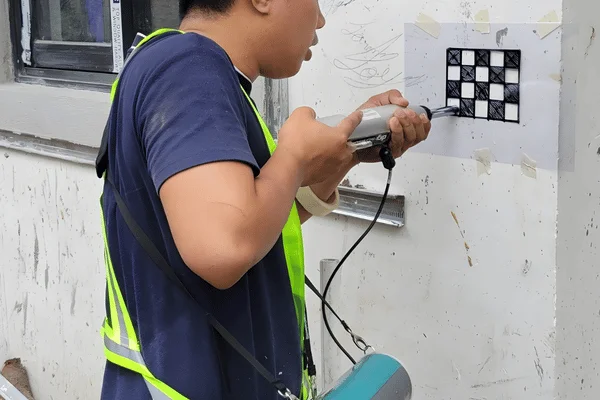
The technology behind Ultrasonic Test has evolved to accommodate a wide range of construction applications. Modern equipment can identify defects with high precision, measure thickness, and provide detailed imaging of structural components. Ultrasonic Test is particularly useful for inspecting foundations, concrete slabs, steel reinforcements, and other critical materials where visual inspection alone cannot detect flaws. It offers advantages over traditional destructive methods by saving time, reducing costs, and maintaining structural integrity.
How Ultrasonic Test Helps Construction Projects
Detecting flaws before they become serious problems is a major benefit of Ultrasonic Test. Hidden cracks, voids, or material weaknesses can compromise safety and reduce the lifespan of a structure. With Ultrasonic Test, engineers can identify these issues early and take corrective action, minimizing the risk of failure. The technique ensures that all components, from foundation piles to concrete slabs, meet quality and safety standards.
Ultrasonic Test also supports compliance with construction regulations in the Philippines. Many projects require verification of material strength and integrity as part of regulatory approvals. By providing accurate, non-destructive evaluation, Ultrasonic Test helps construction teams meet these requirements efficiently. Additionally, the method contributes to long-term maintenance planning by revealing defects that may not yet be visible but could worsen over time.
Compared to other testing methods, Ultrasonic Test offers unique advantages. Unlike visual inspection, which can only assess surface conditions, Ultrasonic Test evaluates internal structure. It is faster and safer than destructive testing, which often requires cutting, drilling, or coring materials. Ultrasonic Test provides precise data that engineers can use to make informed decisions, improving project safety, reliability, and cost efficiency.
Inch-On Materials Testing Laboratory’s Ultrasonic Test Services
Inch-On Materials Testing Laboratory is a DPWH-BRS accredited facility that has been providing professional testing services since 2018. The laboratory specializes in verifying the quality of soil and construction materials while maintaining strict compliance with ASTM and AASHTO standards. Inch-On’s Ultrasonic Test services are designed to deliver accurate, reliable, and actionable results for construction teams across the Philippines.
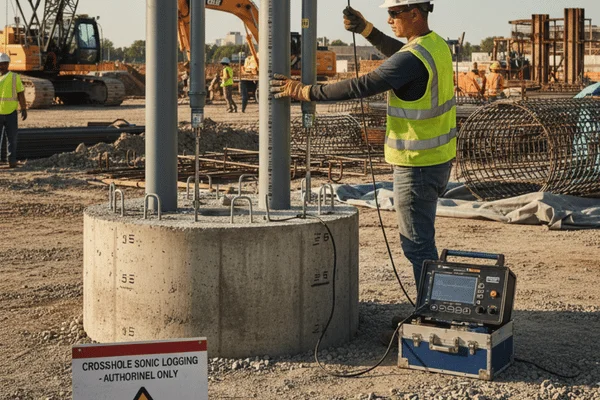
The laboratory offers both on-site and controlled-environment testing. On-site Ultrasonic Test services allow engineers to assess soil, concrete, and foundation piles directly at the project location. This ensures real-time evaluation of structural components under actual conditions. For more detailed analysis, Inch-On’s laboratory testing provides precise measurements of material properties in a controlled setting. By combining field and laboratory testing, Inch-On ensures that clients receive a comprehensive assessment of their construction materials.
Clients choose Inch-On Materials Testing Laboratory for Ultrasonic Test services because of its independent, accredited status and its commitment to quality. The laboratory employs highly trained specialists who operate advanced testing equipment. These professionals interpret results with precision, ensuring that construction teams have the data needed to make confident decisions regarding material integrity and project safety.
Field vs. Laboratory Ultrasonic Test
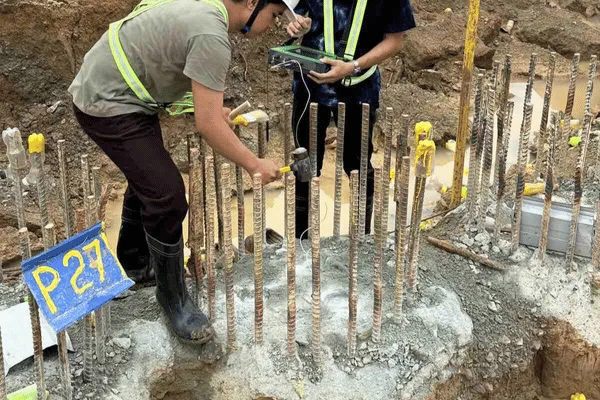
Ultrasonic Test can be performed in the field or in a laboratory setting, each offering distinct advantages. Field Ultrasonic Test involves on-site evaluation of soil, concrete, and foundation piles. This method provides immediate insights into material conditions and allows for adjustments during construction. Engineers can detect potential weaknesses, measure thickness, and assess structural soundness without delaying the project.
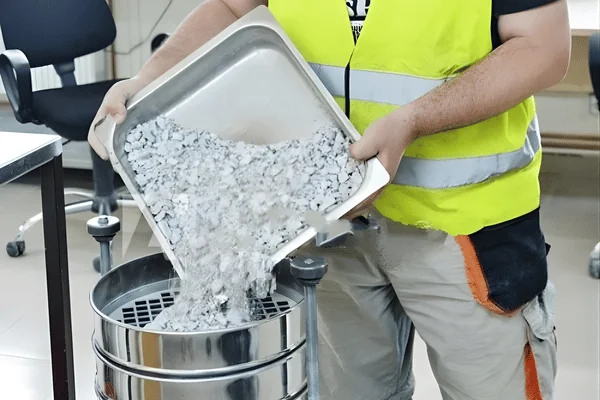
Laboratory Ultrasonic Test delivers controlled, detailed analysis of materials collected from the construction site. Samples are tested with high-precision instruments, providing measurements of thickness, density, and internal defects. Laboratory testing complements field evaluations by confirming results, identifying subtle flaws, and ensuring compliance with industry standards. Choosing between field and laboratory Ultrasonic Test depends on the project requirements, with many construction teams opting for a combination of both to maximize accuracy and reliability.
Real-World Applications of Ultrasonic Test in Construction
Ultrasonic Test plays a vital role in ensuring the safety and durability of structures across various applications. Bridges and large-scale infrastructure projects rely on Ultrasonic Test to verify the integrity of concrete and steel components. Foundation piles undergo testing to confirm proper installation and detect hidden voids that could compromise load-bearing capacity. Ultrasonic Test is also valuable for routine inspections, helping maintenance teams identify emerging issues before they escalate.
Concrete slabs, steel reinforcements, and underground foundations benefit from Ultrasonic Test because it can reveal defects not visible to the naked eye. In many cases, early detection prevents costly repairs, project delays, or safety hazards. Construction teams in the Philippines rely on Inch-On Materials Testing Laboratory to perform Ultrasonic Test for critical projects, knowing that accurate and reliable results support long-term structural performance.
Why Choose Inch-On for Ultrasonic Test
Inch-On Materials Testing Laboratory stands out for its combination of accreditation, experience, and advanced technology. Accredited by the Department of Public Works and Highways – Bureau of Research and Standards (DPWH-BRS), the laboratory meets rigorous standards for testing quality and accuracy. Since 2018, Inch-On has provided independent testing services for soil, concrete, and construction materials, gaining a reputation for reliability across the Philippines.
Professional specialists operate state-of-the-art equipment for Ultrasonic Test, interpreting results with precision to identify hidden defects. The laboratory’s commitment to ASTM and AASHTO standards ensures that testing meets industry requirements, providing clients with confidence in the safety and longevity of their structures. Inch-On’s comprehensive approach combines field and laboratory testing, offering construction teams a full understanding of material conditions for informed decision-making.
Takeaway
Ultrasonic Test provides a powerful, non-destructive method for assessing construction materials and detecting hidden flaws. By using high-frequency sound waves, engineers and construction teams can identify cracks, voids, and other defects without damaging the structure. This ensures long-term safety, structural integrity, and compliance with industry standards. Inch-On Materials Testing Laboratory delivers professional Ultrasonic Test services across the Philippines, combining accreditation, experience, and advanced technology to provide reliable results for every project. Contact Inch-On today to schedule Ultrasonic Test services and protect the lifespan of your construction investments.
Frequently Asked Questions (FAQ)
What is Ultrasonic Test?
Ultrasonic Test is a non-destructive technique that uses high-frequency sound waves to evaluate the internal condition of construction materials such as concrete, steel, and foundation piles. It detects defects like cracks, voids, and inclusions without causing damage.
Why is Ultrasonic Test important for construction projects?
It ensures the safety, durability, and integrity of structures by detecting hidden defects early. This helps prevent failures, reduces maintenance costs, and supports compliance with construction standards.
Can Ultrasonic Test detect all types of material defects?
Ultrasonic Test is highly effective for internal flaws such as cracks, voids, and inconsistencies. However, surface-level defects may require complementary methods like visual inspection or surface hardness testing.
What materials can be tested using Ultrasonic Test?
Concrete, steel, foundation piles, soil-related materials, and other construction components can be tested accurately using Ultrasonic Test.
Why choose Inch-On Materials Testing Laboratory for Ultrasonic Test services?
Inch-On is a DPWH-BRS accredited, independent laboratory with trained specialists and advanced testing equipment. It offers reliable field and laboratory Ultrasonic Test services that comply with ASTM and AASHTO standards.