Concrete Aggregates Testing plays a critical role in construction projects, directly impacting the strength, durability, and performance of concrete and asphalt structures. Aggregates form the foundation of concrete, providing bulk, stability, and resistance to wear and weathering. Any weakness in aggregate quality can compromise the entire structure, leading to cracks, premature deterioration, or safety hazards. By performing precise Concrete Aggregates Testing, engineers and contractors can ensure materials meet strict standards and project specifications, reducing risks and improving longevity. Inch-On Materials Testing Laboratory provides rigorous testing services that follow ASTM standards, offering reliable data for high-stakes construction projects.
Concrete aggregates influence several key properties of concrete, including workability, compressive strength, and resistance to environmental stresses. Fine and coarse aggregates must be evaluated for particle size, shape, density, and durability to ensure optimal performance. Without proper testing, even visually uniform aggregates may harbor weaknesses such as high silt content, friable particles, or susceptibility to abrasion, all of which can undermine the structural integrity of concrete.
Understanding Concrete Aggregates
Concrete consists of three primary components: cement, water, and aggregates. Aggregates, which make up a large proportion of the concrete mix, are categorized as coarse or fine. Coarse aggregates typically include gravel or crushed stone, while fine aggregates consist of sand or other granular materials. The choice, quality, and testing of these aggregates directly influence the final performance of the concrete.
Particle size, shape, and texture are essential considerations for Concrete Aggregates Testing. Aggregates with consistent grading and minimal fine particles provide better workability and reduced water demand. Angular, rough-textured aggregates offer improved bonding with cement paste, while rounded, smooth aggregates can enhance flow but may reduce overall strength. Aggregates must also be free of impurities, such as clay, silt, or organic matter, which can compromise the bond with cement and reduce durability.
Concrete Aggregates Testing ensures that all these factors are carefully measured and verified, providing engineers with accurate data for designing reliable concrete mixes. Using properly tested aggregates results in stronger, longer-lasting concrete, minimizes maintenance costs, and ensures compliance with regulatory and project-specific requirements.
Key Aggregate Tests and What They Reveal
Particle Size & Gradation
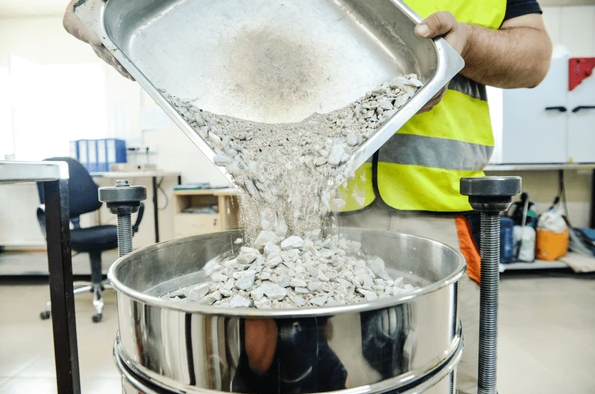
Sieve analysis, conducted according to ASTM C136, measures the particle size distribution of aggregates. Proper gradation ensures dense packing, reduces voids, and enhances workability and strength in concrete mixes. Sieve analysis is a fundamental part of Concrete Aggregates Testing, helping engineers determine whether the material meets project specifications and industry standards.
Testing for materials finer than 75 microns, as outlined in ASTM C117, identifies silt and clay content in aggregates. Excessive fines can weaken the bond between cement paste and aggregates, leading to lower compressive strength and increased susceptibility to cracking. Concrete Aggregates Testing identifies these fine materials, allowing corrective measures such as washing or grading adjustments before concrete production.
Durability & Strength
Concrete must withstand environmental stresses, and aggregates play a major role in determining durability. The Los Angeles Abrasion test, ASTM C131, evaluates the hardness and resistance of aggregates to crushing and wear. Aggregates subjected to repeated impact and abrasion can lose mass, which affects the long-term strength and durability of concrete. Concrete Aggregates Testing ensures aggregates are robust enough for their intended structural application.
Soundness testing, performed under ASTM C88, measures the ability of aggregates to resist weathering, including freeze-thaw cycles and wetting-drying exposure. Aggregates that fail soundness tests can deteriorate over time, leading to surface scaling, cracking, and reduced service life. Conducting this test as part of Concrete Aggregates Testing provides confidence that materials can endure harsh environmental conditions.
Physical Properties & Density
Specific gravity and absorption tests, following ASTM C127, determine the density and water absorption rate of aggregates. These properties are crucial for mix design calculations, allowing engineers to accurately determine the volume of aggregate needed and predict concrete performance. Concrete Aggregates Testing includes these measurements to ensure that aggregates contribute to consistent, predictable concrete quality.
Unit weight and voids analysis, conducted using ASTM C29, evaluates the bulk density and percentage of voids between particles. Accurate unit weight and void calculations are essential for batching, yield prediction, and cost estimation. Concrete Aggregates Testing verifies these parameters to ensure that concrete mixes achieve the desired density and strength.
Harmful Substances
Clay lumps and friable particles, identified according to ASTM C142, can compromise the integrity of concrete. These weak particles are prone to breakdown during handling or curing, resulting in defects such as surface cracking or reduced compressive strength. Concrete Aggregates Testing identifies and quantifies these harmful substances, allowing the use of clean, high-quality aggregates that meet engineering specifications.
Detecting deleterious substances is essential for high-performance concrete, particularly in projects exposed to heavy traffic, freeze-thaw conditions, or aggressive environmental factors. Concrete Aggregates Testing ensures aggregates do not introduce weaknesses that could reduce the safety, durability, or lifespan of the structure.
Field vs Laboratory Testing
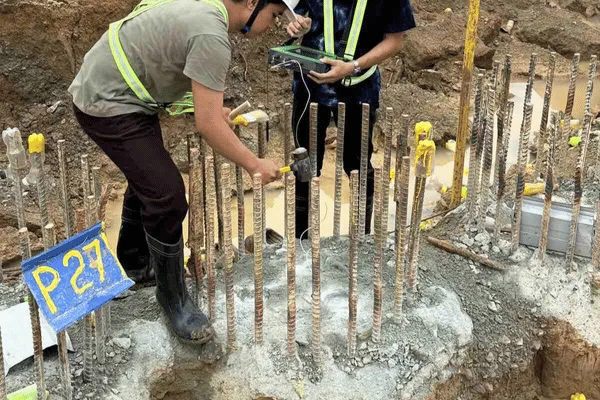
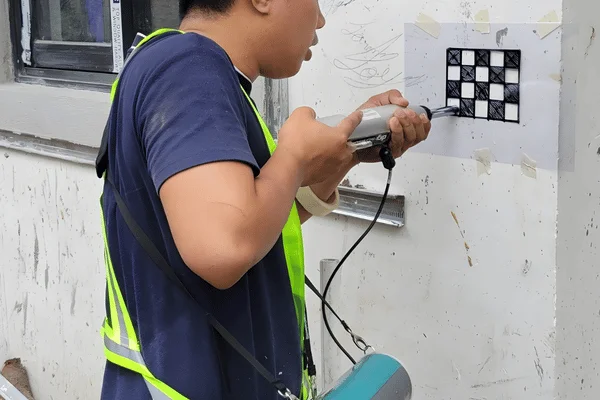
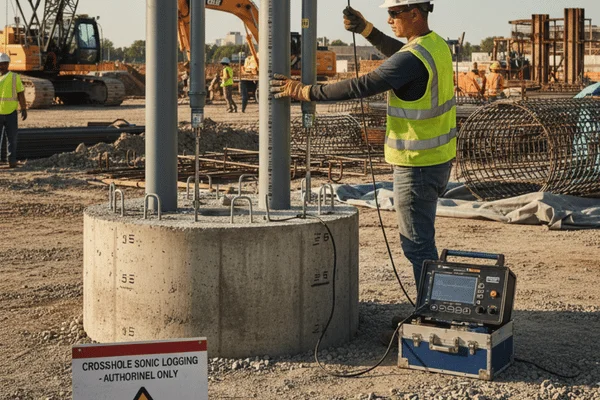
Field testing evaluates soil, concrete, and foundation piles directly at construction sites. It provides real-world insight into material behavior and site conditions, helping engineers confirm that construction foundations are stable and materials perform as expected. Field testing is an essential complement to laboratory analysis, ensuring that Concrete Aggregates Testing results translate accurately to practical performance.
Laboratory testing delivers precise evaluation of soil and construction materials under controlled conditions. Using advanced equipment and standardized procedures, laboratories provide detailed measurements of aggregate properties, including particle size, density, absorption, and durability. Laboratory testing guarantees that materials comply with ASTM and AASHTO standards and helps prevent quality issues before concrete is placed. Combining laboratory and field testing ensures a comprehensive understanding of material performance.
How Inch-On Ensures Accuracy and Compliance
Inch-On Materials Testing Laboratory is a DPWH-BRS accredited facility with a reputation for precision and reliability since 2018. Accreditation ensures that testing procedures meet stringent regulatory requirements and that results are accepted by clients and authorities alike. The laboratory follows ASTM and American Association of State Highway and Transportation Officials protocols, providing internationally recognized data for engineers and contractors.
Concrete Aggregates Testing at Inch-On includes particle size analysis, durability and strength testing, density and void measurements, and assessment for harmful substances. State-of-the-art laboratory equipment and experienced personnel ensure accurate results for every project. Inch-On also provides on-site testing for soil, concrete, and foundation piles, verifying structural integrity at its source. This combination of laboratory precision and field evaluation delivers reliable data that helps projects meet design and safety standards.
Benefits of Professional Concrete Aggregates Testing
Conducting professional Concrete Aggregates Testing offers multiple advantages for construction projects. Accurate aggregate evaluation improves concrete strength and durability, reducing the risk of structural defects. Testing identifies contaminants or weak particles that can compromise performance, allowing corrective measures before construction begins. Professional testing also ensures compliance with national and international standards, which is essential for large-scale infrastructure projects, public works, and high-risk engineering applications.
By using tested aggregates, engineers can optimize concrete mix designs, improve workability, and predict long-term performance. Proper Concrete Aggregates Testing contributes to cost savings by reducing material waste, minimizing maintenance, and extending the lifespan of concrete structures. Clients gain peace of mind knowing that every material used in their project has been evaluated to the highest standards.
Frequently Asked Questions (FAQ)
What is Concrete Aggregates Testing?
Concrete Aggregates Testing evaluates the quality, composition, and performance of aggregates used in concrete and asphalt. It includes measurements of particle size, density, durability, and harmful substances to ensure reliable and long-lasting concrete.
Why is particle size important in aggregates?
Particle size affects concrete workability, strength, and durability. Well-graded aggregates provide better packing, reduce voids, and improve bonding with cement paste, leading to stronger concrete.
How does ASTM C131 improve concrete durability?
ASTM C131 measures aggregate hardness and resistance to wear. This ensures aggregates can withstand handling and environmental stresses without losing strength, resulting in more durable concrete.
What is the difference between field testing and laboratory testing?
Field testing evaluates materials on-site under real-world conditions, while laboratory testing provides precise measurements under controlled conditions. Both are essential for comprehensive Concrete Aggregates Testing.
How does testing for clay and friable particles affect concrete performance?
Clay lumps and friable particles can weaken concrete, leading to surface defects, cracking, and reduced compressive strength. Testing ensures aggregates are clean and structurally sound.
Why choose Inch-On for Concrete Aggregates Testing?
Inch-On Materials Testing Laboratory is DPWH-BRS accredited, follows ASTM and AASHTO standards, and offers both laboratory and field testing services. The laboratory provides accurate, reliable data to ensure strong and durable construction projects.