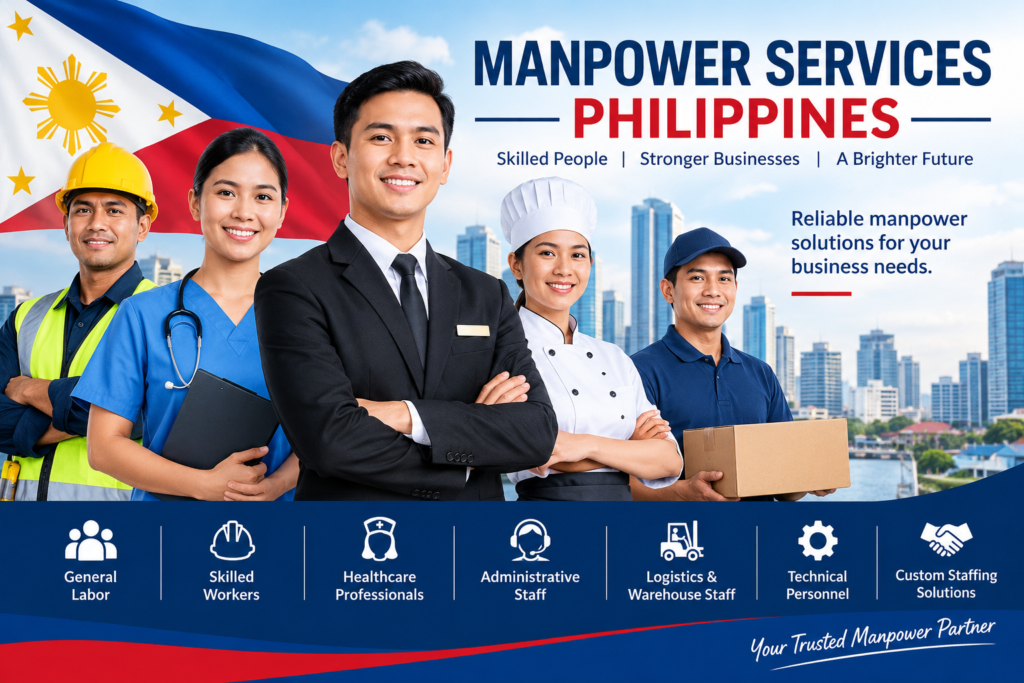
Finding the right people for the right positions can directly affect how smoothly a business operates. Whether a company is expanding, handling a major project, or dealing with an unexpected staffing shortage, having access to qualified workers can make workforce planning much easier. This is where manpower services Philippines can provide valuable support to businesses across different industries. Manpower providers can assist with recruitment, candidate screening, placement, and other workforce-related processes based on the arrangement and services offered. For companies with limited internal recruitment resources, professional staffing support can reduce the amount of time spent searching for suitable candidates. At the same time, employers still need to carefully evaluate providers, employment arrangements, qualifications, and applicable Philippine labor requirements. Understanding how manpower services work can help business owners and HR teams make informed decisions when developing their workforce.
Understanding Manpower Services in the Philippines
Manpower services generally refer to professional workforce solutions that help businesses find, screen, place, or coordinate workers for particular positions and operational requirements. Depending on the provider, these services may cover recruitment, candidate sourcing, interviews, skills assessment, placement, staffing, and workforce coordination. The objective is to connect businesses with people whose qualifications and experience match specific job requirements. In the Philippines, recruitment and placement activities fall within a regulated labor framework, and the Department of Labor and Employment recognizes private-sector participation in recruitment and placement under applicable rules. This makes it important for businesses to understand what type of manpower arrangement they are entering into before engaging a provider. A professional approach can help companies organize their hiring requirements while giving candidates a more structured path toward employment opportunities. For growing organizations, manpower services Philippines can therefore become one component of a broader workforce planning strategy.
Why Businesses Use Manpower Services Philippines
Businesses may turn to manpower providers for many different reasons, but staffing requirements are often at the center of the decision. A company may need additional workers because it has received new projects, expanded operations, opened another location, or experienced an increase in customer demand. Another organization may have a small HR department that does not have enough resources to manage a large recruitment campaign. A manpower provider can potentially handle parts of the candidate-sourcing and screening process, allowing internal personnel to spend more time on other responsibilities. External workforce support can also be useful when an organization needs workers with specific technical abilities or industry experience. However, the exact services available depend on the provider and the employment arrangement established with the client. When properly matched with business requirements, staffing support can make workforce planning more organized and responsive.
Common Types of Manpower Services Available
Manpower providers can offer different services depending on their specialization, recruitment capabilities, and client requirements. Recruitment and placement services may help businesses source candidates for specific permanent or ongoing positions. Temporary and project-based staffing may be suitable when a company needs additional workers for a defined period or particular operational requirement. Skilled and technical staffing can focus on candidates with specialized training, certifications, experience, or technical capabilities. Administrative staffing can support positions involving office administration, customer service, clerical work, documentation, and related responsibilities. Industrial and operational staffing may serve manufacturing, logistics, warehousing, construction, and other hands-on environments. Some providers may also offer broader workforce outsourcing or staffing coordination services, although the legal structure and responsibilities can vary. Businesses should therefore examine exactly what a provider offers instead of assuming that every manpower agency provides the same services.
Industries That Can Benefit From Manpower Services
Different industries have different workforce requirements, which makes industry-specific staffing experience particularly useful. Manufacturing companies may need production personnel, machine operators, quality-control workers, warehouse staff, and technical employees. Construction and engineering businesses may require workers with specific trade skills, site experience, technical knowledge, or relevant qualifications. Logistics and distribution companies frequently need personnel for warehousing, inventory management, transportation support, and order fulfillment. Hospitality and tourism businesses may require employees for guest services, housekeeping, food operations, and administrative functions. Retail organizations can require sales personnel, store assistants, customer-service representatives, and inventory workers. Offices and business-service companies may need administrative, customer support, technical, or specialized professional talent. By understanding the operational environment of each industry, a manpower provider can better align candidate qualifications with the actual responsibilities of the available position.
How the Manpower Recruitment Process Works
A structured recruitment process typically begins with a workforce assessment. The business identifies the number of employees needed, the positions to be filled, required qualifications, expected schedules, and other job conditions. The next step is usually developing clear job specifications so potential candidates understand the role and the employer has objective selection criteria. Candidate sourcing can then take place through recruitment networks, job platforms, referrals, databases, and other appropriate channels. Applicants may undergo resume screening, interviews, skills assessments, background checks, or other evaluations depending on the position. Selected candidates then proceed through the applicable documentation and employment processes before deployment or placement. Government employment systems such as PhilJobNet and public employment services also form part of the wider Philippine employment ecosystem. A clear recruitment workflow helps reduce confusion and creates a more consistent process for both employers and candidates.
Benefits of Working With a Professional Manpower Provider
One of the potential benefits of working with a manpower provider is access to established recruitment channels and candidate networks. Businesses can also reduce some of the administrative effort associated with advertising positions, reviewing applications, and coordinating initial candidate screening. This can be particularly useful for organizations that need to recruit multiple workers within a limited timeframe. A provider with experience in a particular industry may also have a better understanding of the qualifications commonly required for specific positions. Workforce flexibility is another consideration because staffing requirements can change as projects and business conditions evolve. Professional staffing support can complement an internal HR department rather than necessarily replacing it. The effectiveness of the arrangement, however, depends on the provider’s recruitment practices, candidate quality, communication, and ability to understand the employer’s actual requirements.
What to Look for in a Manpower Services Provider in the Philippines
Choosing a manpower provider requires more than comparing service fees. Businesses should examine the provider’s experience, recruitment process, candidate screening procedures, communication practices, and ability to supply workers for the relevant industry. Applicable credentials and regulatory requirements should also be verified, particularly when the provider is engaged in recruitment and placement activities. DOLE materials identify rules governing private employment agencies and local recruitment and placement, including Department Order No. 216-20 for industry workers. Companies should also ask how candidates are sourced, screened, interviewed, and matched with available positions. Clear service agreements should identify responsibilities, fees, staffing expectations, replacement procedures, and other important terms. Businesses may also benefit from choosing providers that maintain consistent communication after workers are placed. Taking time to evaluate these factors can help employers establish a more transparent and organized workforce arrangement.
Compliance and Responsible Manpower Practices
Compliance should be an important part of any workforce arrangement in the Philippines. The Labor Code contains provisions covering recruitment and placement, employment conditions, working hours, wages, worker welfare, and other employment matters. Businesses should understand the difference between recruitment and placement activities and legitimate contracting or subcontracting arrangements because these can involve different legal requirements. DOLE’s rules on contracting and subcontracting specifically distinguish legitimate contracting arrangements from recruitment and placement activities. Employers should carefully review agreements to understand who is responsible for particular employment obligations and workforce processes. Worker documentation, employment terms, workplace safety, and applicable labor standards should also be handled appropriately. Responsible manpower practices protect the interests of both businesses and workers while helping create a more transparent employment environment. When questions arise about specific arrangements, businesses can consult applicable DOLE rules or seek qualified legal or labor-relations advice.
How Manpower Services Can Support Workforce Flexibility
Workforce requirements rarely remain exactly the same throughout the life of a business. A company may experience seasonal demand, new contracts, expansion, staff turnover, or temporary increases in workload. Manpower services can give organizations another resource for responding to these changing requirements. For example, a logistics business experiencing increased order volumes may need additional warehouse personnel, while a construction company may require workers with specific skills for a particular project. The important point is to identify workforce needs early instead of waiting until staffing shortages begin affecting operations. Businesses can communicate expected hiring volumes, qualifications, work schedules, and deployment timelines to their manpower provider. This gives the provider a clearer basis for sourcing suitable candidates. Workforce flexibility works most effectively when staffing arrangements are planned alongside the company’s broader HR and operational strategy.
Choosing Manpower Services Based on Business Needs
Every business has different workforce requirements, so there is no single staffing arrangement that works for every organization. The first step is to identify the exact positions that need to be filled and the responsibilities associated with each role. Employers should determine whether their needs involve permanent hiring, temporary staffing, project-based workers, recurring recruitment, or another arrangement. Required education, technical skills, certifications, work experience, and other qualifications should also be clearly defined. Companies should establish realistic recruitment timelines and communicate when workers are expected to begin their assignments. It is also useful to determine how much support is needed from the provider, from candidate sourcing to screening, placement, and workforce coordination. Comparing providers according to capabilities, credentials, communication, and service terms can help businesses select an arrangement that matches their actual requirements.
Building a More Effective Workforce Through Manpower Services
A strong workforce begins with placing people in positions that match their abilities and responsibilities. When job requirements and candidate qualifications are clearly aligned, employees have a better foundation for performing their assigned duties. Manpower providers can support this process by helping employers reach candidates who meet defined requirements. Internal HR teams can then focus on organizational development, employee engagement, training, and other strategic responsibilities. Communication remains important throughout the relationship because workforce needs can change after workers are placed. Businesses should regularly review staffing levels, employee requirements, skills gaps, and future workforce demands. This allows staffing decisions to become part of an ongoing planning process rather than an emergency response to vacancies. With careful planning and appropriate provider support, manpower services Philippines can contribute to a more organized approach to workforce management.
Frequently Asked Questions About Manpower Services Philippines
What are manpower services in the Philippines?
Manpower services are workforce solutions that can help businesses source, screen, recruit, place, or coordinate workers for particular positions. The exact services differ between providers, so employers should review the scope of services before entering an agreement. Some providers focus primarily on recruitment and placement, while others may offer broader staffing support. Businesses should identify their specific workforce requirements before selecting a provider. The recruitment process may include candidate sourcing, application screening, interviews, assessments, and documentation. Depending on the arrangement, the provider may also coordinate deployment or other workforce-related activities. Employers should ensure that the arrangement follows applicable Philippine labor requirements.
What industries can use manpower services?
Almost any industry with legitimate workforce requirements may explore appropriate manpower solutions. Common examples include manufacturing, construction, engineering, logistics, warehousing, hospitality, retail, offices, and business services. Each sector may require different skills, experience, schedules, and qualifications. A provider familiar with a particular industry may have a better understanding of those requirements. Businesses should clearly communicate the working environment and responsibilities associated with every position. This can improve the likelihood of matching suitable candidates with available roles. Industry-specific recruitment can also make candidate screening more relevant.
What does a manpower agency typically do?
A manpower agency or staffing provider may source candidates, screen applications, conduct interviews, assess qualifications, and coordinate placement depending on its services. Some providers may also assist with workforce documentation and deployment processes. The exact responsibilities should be stated clearly in the service agreement. Employers should not assume that every provider handles the same functions. Clear communication helps establish who is responsible for each part of the hiring and staffing process. Businesses should also verify that the provider is properly authorized for activities that require government authority. DOLE provides regulatory information concerning private-sector participation in recruitment and placement.
How do I choose a manpower services provider in the Philippines?
Start by identifying the type and number of workers your business needs. Then evaluate providers according to relevant experience, recruitment capabilities, screening processes, communication, credentials, and service terms. Ask how candidates are sourced and how their qualifications are verified. Review the provider’s agreement carefully to understand fees, responsibilities, replacement arrangements, and other conditions. Businesses should also verify applicable regulatory requirements before proceeding. A provider should be able to explain its staffing process clearly and transparently. Choosing based on overall suitability rather than price alone can help businesses establish a more practical workforce arrangement.
Can manpower services provide temporary or project-based workers?
Some manpower providers offer temporary or project-based staffing, but availability depends on the provider and the applicable employment arrangement. Businesses should explain the expected project duration, number of workers, skills required, work location, and schedule. The provider can then determine whether it can support those requirements. Employers should also ensure that the proposed arrangement complies with applicable labor regulations. Project requirements should be documented clearly before workers are deployed. Both parties should understand their respective responsibilities. Professional workforce planning can help prevent misunderstandings during the assignment.
Are manpower services regulated in the Philippines?
Recruitment and placement activities are regulated under Philippine labor rules. DOLE’s Labor Code materials specifically address recruitment and placement of workers and private-sector participation in these activities. DOLE also identifies Department Order No. 216-20 as the rules governing recruitment and placement of industry workers by private employment agencies for local employment. Businesses should therefore verify the applicable requirements for their specific staffing arrangement. When the arrangement involves contracting or subcontracting, different rules may apply. Professional legal or labor advice may be appropriate when the structure of a workforce arrangement is complex.
What should a business prepare before contacting a manpower provider?
Businesses should prepare clear job descriptions for every position they need to fill. These descriptions should identify responsibilities, required qualifications, experience, technical skills, working hours, and location. Companies should also determine how many workers are needed and when they are expected to start. Information about project duration or expected employment period can also help the provider recommend an appropriate staffing arrangement. Employers should establish realistic expectations regarding recruitment timelines and candidate availability. A defined budget and understanding of service requirements can make discussions with providers more productive. The more specific the workforce requirements are, the easier it can be for a provider to search for appropriate candidates.
How can manpower services help businesses manage staffing shortages?
Manpower providers can give businesses access to recruitment resources and candidate networks that may supplement their internal hiring efforts. This can be useful when a company needs several workers or has limited HR capacity. Providers may handle parts of the sourcing and screening process according to the agreed service arrangement. Faster access to candidates may help businesses address workforce requirements more systematically. However, staffing support does not eliminate the need for employers to clearly define their requirements and evaluate candidates appropriately. Businesses should also consider longer-term workforce planning to prevent recurring shortages. Used strategically, manpower services can become one resource within a broader employee recruitment and workforce management strategy.
Takeaway
Manpower services Philippines can provide businesses with structured workforce support for recruitment, staffing, placement, and related employment requirements. The value of these services depends heavily on how well the provider understands the company’s industry, job requirements, workforce volume, and operational needs. Businesses should evaluate candidate sourcing, screening procedures, provider credentials, communication, service agreements, and applicable labor requirements before choosing a manpower partner. Philippine labor regulations also make it important to distinguish recruitment and placement from other workforce arrangements. A well-planned staffing strategy can help businesses respond to workforce demands while allowing internal teams to focus on their broader organizational responsibilities. The most effective approach is to treat manpower planning as an ongoing business function rather than simply a response to vacant positions. With clear requirements, responsible practices, and careful provider evaluation, organizations can build workforce solutions that support their operational goals and changing staffing needs.