Reliable Facade Access for Philippine High-Rise Buildings
High-rise buildings require more than attractive architecture and strong structural design to remain functional over the years. Their exterior surfaces, windows, glass panels, architectural features, and other facade elements need regular cleaning, inspection, repair, and maintenance. Reaching these areas can become difficult when a building has considerable height, complex geometry, setbacks, overhangs, or large glazed surfaces. This is where a Building maintenance unit Philippines solution can provide a permanent and engineered method of reaching exterior areas. A Building Maintenance Unit, commonly called a BMU, is generally installed at roof level and provides a suspended cradle or platform that can be positioned along the building facade. BMUs are specifically used as permanent facade-access systems for high-rise buildings and can support activities such as cleaning, inspection, window replacement, and facade maintenance.
For property owners and facility managers, facade access should be considered part of the building’s long-term maintenance strategy. A well-designed system can make recurring exterior work more organized while reducing dependence on temporary access arrangements. The system can also be designed around the actual architecture of a particular building rather than relying on a one-size-fits-all approach. This is especially important for modern developments where facades may include glass curtain walls, architectural fins, terraces, projections, and irregular sections. Selecting the right equipment requires coordination between architectural, structural, safety, and maintenance considerations. When these factors are addressed early, building owners can establish a more practical approach to maintaining the exterior of a high-rise property.
What Is a Building Maintenance Unit?
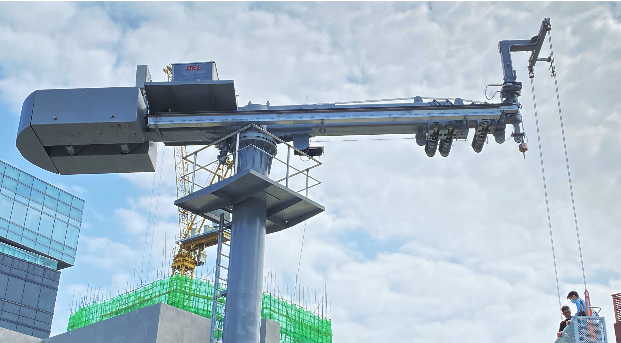
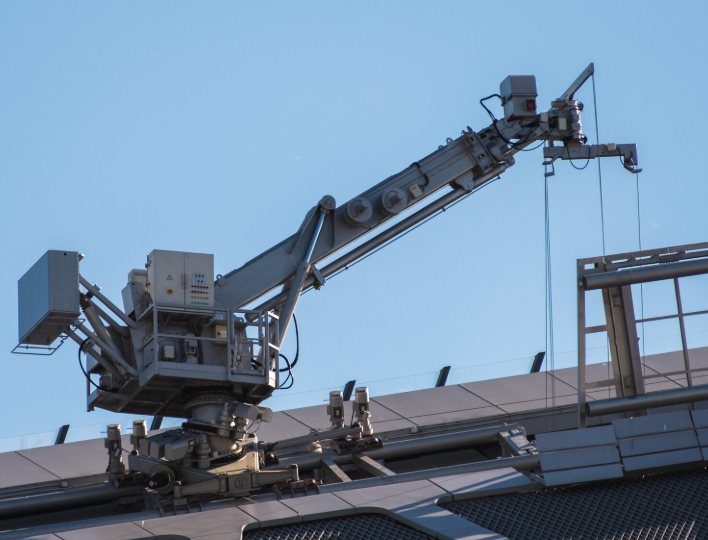
A Building Maintenance Unit is a permanent mechanical facade-access system designed to help authorized personnel reach the exterior of a building from an elevated position. Depending on its configuration, the system can include roof-mounted machinery, tracks or trolleys, a jib, suspension equipment, wire ropes, hoists, and a suspended cradle. The equipment allows the cradle to be raised, lowered, and positioned according to the building’s facade-access requirements. Modern BMUs can be customized to accommodate different building heights, roof layouts, facade geometries, and access requirements. Some systems use telescopic or articulated components to provide additional reach around roof structures or architectural obstacles. Manufacturers describe BMUs as engineered systems that can traverse roof-level tracks and suspend maintenance cradles for facade work.
The main purpose of a BMU is to provide dependable access to areas that would otherwise be difficult or impractical to reach. A building may use the system for routine window cleaning, facade inspection, minor repair work, glass-related maintenance, or other permitted exterior activities. The actual capabilities depend on the system’s design, rated capacity, operating procedures, and manufacturer specifications. Because BMUs involve suspended equipment and work at height, proper engineering and operational controls are essential. A BMU should therefore be treated as an integrated building-access system rather than simply as a piece of lifting equipment.
Why Philippine High-Rise Buildings Need Proper Facade Access
The continued development of high-rise residential, commercial, hospitality, healthcare, and mixed-use properties makes exterior maintenance an important facility-management consideration in the Philippines. Tall buildings can have hundreds of windows and extensive facade surfaces that cannot be conveniently accessed from ground level. Cleaning and inspection can become more challenging when architectural designs incorporate recessed sections, balconies, projections, glass walls, or other obstacles. Without an appropriate access strategy, routine maintenance may require temporary equipment, specialized contractors, or alternative access methods. These arrangements can become more complicated when work needs to be performed in areas above active pedestrian zones or occupied spaces. A permanent facade-access system can provide a building-specific method for reaching designated exterior areas.
Another important consideration is long-term building preservation. Dirt, environmental exposure, damaged sealants, deteriorating finishes, and other facade issues can affect the appearance and performance of a property when they are not addressed regularly. A reliable access system can make scheduled inspection and maintenance more manageable. Building owners can also plan maintenance activities around the actual facade rather than waiting until access becomes an urgent problem. This approach supports better facility planning and helps ensure that the building’s exterior remains accessible throughout its service life. Proper access planning is particularly valuable when facade maintenance needs to be performed repeatedly over many years.
How a Building Maintenance Unit Works
A typical BMU begins with equipment positioned on the roof or another appropriately engineered location. Depending on the design, a trolley or track system can allow the machinery to move horizontally along designated portions of the roof. A jib or other extending mechanism may then position the suspension point over the facade. The cradle is suspended using hoisting equipment and can travel vertically along the building’s exterior. Some systems incorporate additional positioning features to accommodate complex facade shapes and architectural obstacles. The exact sequence of movement varies according to the BMU’s engineering design and control system.
The operator controls the equipment according to the manufacturer’s procedures and the building’s approved operating requirements. During operation, the cradle must remain within its permitted capacity and operating envelope. Obstacles, facade projections, roof equipment, wind conditions, and other hazards must be considered before and during use. Proper procedures can include pre-work assessments, operator checklists, work records, and restrictions on unauthorized operation. BMU management plans commonly emphasize trained operators, documented checks, safe work procedures, and controls designed to protect workers, occupants, and the public.
Major Components of a Building Maintenance Unit
A Building maintenance unit Philippines system can contain several major components, with the exact configuration depending on the building. Roof-mounted machinery provides the primary mechanical support for positioning and suspending the cradle. Tracks, rails, or trolley systems can allow the equipment to travel across designated roof areas. A jib, telescopic arm, or articulated mechanism can provide the necessary outreach to position the cradle along the facade. Suspension ropes and hoists provide controlled vertical movement, while the cradle serves as the working platform for authorized personnel. Depending on the design, additional rollers, bumpers, sensors, brakes, controls, and safety devices may be incorporated.
The cradle itself is an important part of the overall system because it must accommodate the intended personnel, tools, and permitted materials. Safety-related features can include guardrails, emergency controls, limit devices, stabilization mechanisms, and other protective systems. International powered-platform requirements, for example, address matters such as load ratings, stability, weather-resistant components, guide systems, and guardrails for suspended units. The exact requirements for a Philippine project should be determined through appropriate engineering, applicable regulations, manufacturer specifications, and qualified professionals. Every component should work as part of the complete system rather than being evaluated independently.
Common Applications of a BMU in the Philippines
One of the most familiar applications of a BMU is high-rise window and glass cleaning. Large buildings with extensive glazing can require recurring cleaning schedules to maintain visibility and appearance. A BMU can provide access to designated sections of the facade without requiring workers to rely solely on ground-based equipment. The same system may also support facade inspection, allowing qualified personnel to examine visible exterior components from closer range. Depending on the equipment design and approved operating limitations, it can also support certain maintenance and repair activities.
BMUs may be useful for accessing glass panels, facade finishes, architectural elements, and other exterior components. Some high-rise buildings may also need access for replacing panels or windows, although these activities can involve additional engineering and lifting requirements beyond ordinary cleaning. A BMU’s rated capacity should never be exceeded simply because a particular task appears physically possible. The equipment should only be used for activities permitted by its design and operating documentation. This disciplined approach helps maintain safe and predictable facade-access operations.
Selecting the Right Building Maintenance Unit Philippines Solution
Choosing a BMU requires careful consideration of the building itself. The first factor is usually the height and overall configuration of the structure. Designers also need to examine facade geometry, roof space, parapets, mechanical equipment, setbacks, projections, and areas requiring regular maintenance. The desired horizontal reach and vertical access range must be established before equipment is selected. The intended cradle capacity and types of maintenance work should also be identified. These factors help determine whether a standard configuration or a customized system is appropriate.
The maintenance strategy should also be considered during the design process. A system intended primarily for routine window cleaning may have different requirements from one expected to support broader facade-maintenance activities. Architects and engineers should coordinate the BMU with the structural design and roof layout so that the equipment has suitable support and adequate operating clearance. This coordination can be especially important for complex buildings where roof equipment and architectural features occupy significant space. Proper planning can help prevent expensive modifications after construction. Facade-access design guidance emphasizes integrating maintainability into building design and providing adequate access for complex and high-rise structures.
Safety Considerations When Operating a BMU
Safety is one of the most important considerations when using a Building Maintenance Unit because personnel may be suspended at significant heights. Only appropriately trained and authorized operators should operate the equipment. Before work begins, the condition of the system, work area, weather, facade, and surrounding environment should be evaluated. Operators should follow the manufacturer’s instructions and the building’s established procedures. Tools and materials should be secured appropriately so that they do not create falling-object hazards. The area below the work zone may also need suitable access restrictions, signage, barriers, or other controls.
Weather conditions are another important consideration for suspended facade work. Strong winds or changing environmental conditions can affect the stability and safe operation of suspended platforms. Operators should follow the equipment’s specified operating limits rather than relying on personal judgment alone. Emergency procedures should also be established so workers know what to do if the equipment stops, loses power, encounters an obstruction, or experiences another abnormal condition. Proper records, checklists, inspections, and operator assessments can strengthen the overall management process. Published BMU management guidance emphasizes authorized operation, pre-work assessments, checklists, safe work procedures, and controls for hazards such as falling tools and excessive movement.
Maintenance and Inspection of BMU Systems
A BMU needs maintenance just as the building facade does. Regular inspection can help identify deterioration, mechanical issues, electrical problems, damaged ropes, worn components, or problems with safety devices before they affect normal operations. Maintenance schedules should be based on manufacturer recommendations, engineering requirements, applicable rules, and the specific operating environment. Inspection records should be maintained so facility managers can track the equipment’s condition over time. Any identified defect should be assessed and addressed by appropriately qualified personnel before the equipment is returned to service when required.
Preventive maintenance can also support longer equipment life and more reliable operation. Components such as hoists, brakes, suspension systems, controls, tracks, rollers, and structural connections may require different inspection or maintenance activities. The exact requirements depend on the system and manufacturer. Facility managers should avoid assuming that all BMUs have identical maintenance schedules. A documented maintenance program makes it easier to demonstrate that the equipment is being managed systematically and responsibly.
BMU Compared With Other High-Rise Access Methods
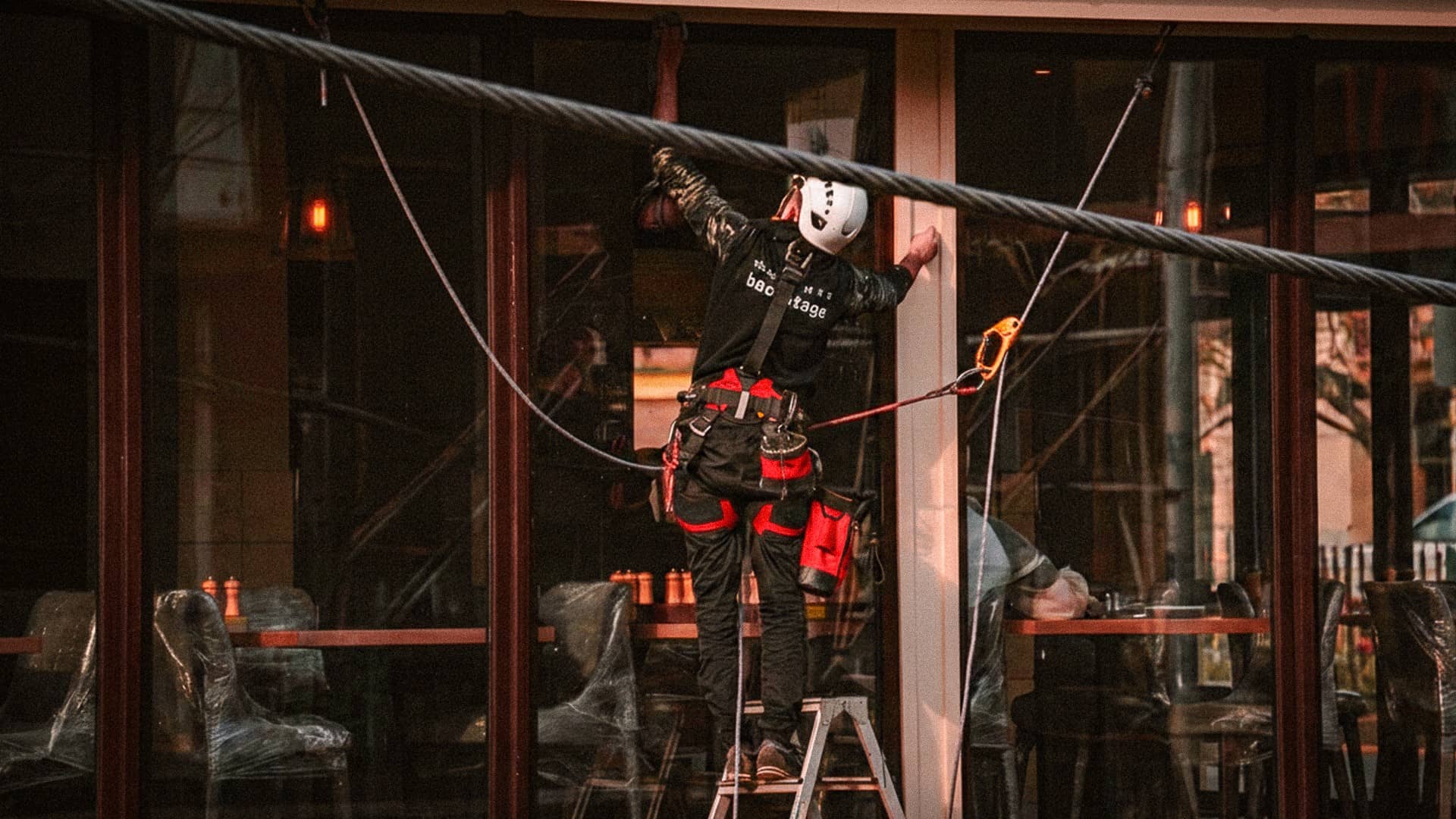
A BMU is only one possible approach to facade access. Rope access, temporary suspended platforms, mobile elevated work platforms, and other equipment may also be suitable depending on the building and task. Ground-based equipment may work effectively for lower sections of a building but may have limitations when the structure is extremely tall or surrounded by obstacles. Rope access can provide flexibility for certain specialized tasks, while temporary systems may be appropriate where permanent equipment is unavailable. The best method depends on the height, location, duration, frequency, facade design, site conditions, and nature of the work.
A permanent BMU can be especially valuable when a building requires frequent access to large areas of its facade. Because the system is designed around the building, its reach and movement can be planned according to specific maintenance zones. However, it does not automatically replace every other access method. Certain facade areas may still require alternative equipment because of architectural restrictions or access limitations. A comprehensive maintenance strategy may therefore combine a BMU with other suitable access methods. The goal is to provide a safe and practical means of reaching each required area rather than selecting equipment based solely on the building’s height.
Benefits of Installing a Building Maintenance Unit
A properly designed BMU can provide several long-term advantages for a high-rise property. Permanent facade access can make recurring maintenance easier to organize and schedule. It can also provide a predictable method for reaching exterior areas that would otherwise require temporary arrangements. Regular access supports routine cleaning and inspection, which can help property teams identify maintenance issues earlier. A well-planned system can also be integrated into the building’s architectural and structural design. This is why facade access should ideally be considered before construction rather than treated as an afterthought.
Another benefit is improved planning for future maintenance. Buildings can remain operational for decades, and their exterior components will eventually require repair, replacement, or refurbishment. Having an established access system can simplify planning for these activities when they fall within the system’s approved capabilities. Facility managers can also develop recurring inspection and maintenance schedules around the available access equipment. This can support more consistent property upkeep and help preserve the building’s visual and functional qualities. Ultimately, a BMU can be an important part of a property’s long-term maintenance infrastructure.
Planning a BMU for New and Existing Buildings
For new developments, BMU planning should begin as early as practical. Architects, structural engineers, facade specialists, contractors, and facility-management teams should coordinate the access requirements before the roof and facade design are finalized. Important issues include structural support, equipment storage, roof access, operating clearance, facade geometry, power requirements, and maintenance zones. Early coordination can help avoid conflicts between the BMU and rooftop mechanical equipment. It can also ensure that the final system is capable of reaching the areas that the building will actually need to maintain.
Existing buildings require a different evaluation process. Before adding or modifying a BMU, engineers must determine whether the roof and structure can accommodate the proposed system. The facade configuration and available access points should also be evaluated. Existing mechanical equipment, parapets, roof structures, and architectural elements may influence the available configuration. A detailed assessment can help determine whether a new system is feasible and what modifications may be necessary. This makes professional engineering evaluation an important part of any retrofit project.
Choosing a Building Maintenance Unit Supplier in the Philippines
Choosing the right supplier is an important part of developing a reliable facade-access system. Building owners should look beyond the initial equipment price and evaluate engineering capability, system design, installation support, commissioning, documentation, training, inspection, and after-sales service. A supplier should understand that each building has different facade-access requirements. The supplier should also be able to coordinate with the project’s architectural and structural teams when developing the equipment configuration. Documentation covering system specifications, operating procedures, maintenance requirements, and applicable certifications should be carefully reviewed.
A local provider can also help building owners understand the practical requirements of implementing a Building maintenance unit Philippines solution. For example, Unity Express currently presents CoxGomyl BMUs and facade-access systems for high-rise buildings, commercial developments, hotels, hospitals, and complex architectural facades in the Philippines. Building owners should still evaluate suppliers independently and confirm that the proposed equipment is appropriate for their particular project. The system should be selected according to engineering requirements, intended use, safety provisions, and long-term maintenance needs. A strong supplier relationship can extend beyond installation to training, servicing, inspections, and ongoing technical support.
Frequently Asked Questions
What is a Building Maintenance Unit used for?
A Building Maintenance Unit is primarily used to provide controlled access to the exterior facade of a building. Common applications include window cleaning, facade inspection, maintenance, and certain repair or replacement activities. The exact permitted uses depend on the equipment’s design and rated capacity. It is particularly useful for high-rise buildings where ground-based access is impractical. A BMU is typically designed as a permanent part of the building’s facade-access strategy.
Does every high-rise building need a BMU?
Not every high-rise building necessarily requires the same type of facade-access equipment. The appropriate system depends on building height, facade design, maintenance requirements, roof configuration, and available access methods. Some properties may use a BMU alongside rope access or other equipment. A professional facade-access assessment can help determine the most appropriate solution. Planning should focus on how every required facade area will be safely accessed throughout the building’s service life.
How does a BMU differ from rope access?
A BMU is generally a permanent mechanical facade-access system integrated with the building. Rope access relies on trained personnel using specialized rope systems to reach specific areas. BMUs can be advantageous when large sections of a facade require recurring access, while rope access can offer flexibility for certain specialized locations. Neither method should automatically be considered suitable for every task. The building design, task requirements, risk assessment, and available equipment should guide the selection.
Can an existing building have a BMU installed?
An existing building may potentially be fitted with a BMU, but feasibility depends on its structural and architectural conditions. Engineers need to evaluate roof capacity, available space, facade geometry, access requirements, and potential interference with existing equipment. Additional structural modifications may be necessary in some projects. A qualified assessment should be completed before equipment is selected. Retrofitting should never be based solely on visual inspection or equipment availability.
How often should a BMU be inspected?
Inspection and maintenance frequency depends on the specific system, manufacturer instructions, applicable requirements, operating conditions, and professional assessment. Routine pre-use checks may also be required in addition to scheduled inspections. Facility managers should maintain appropriate inspection and maintenance records. Any equipment showing signs of damage or malfunction should be evaluated before further operation. A documented preventive-maintenance program helps support reliable equipment management.
Who should operate a BMU?
A BMU should be operated only by personnel who have received appropriate training and authorization for the specific equipment. Operators should understand the manufacturer’s instructions, operating controls, emergency procedures, site hazards, and applicable safety requirements. Building management should maintain appropriate authorization and training records. Contractors using the equipment should also follow the building’s established procedures. Proper operator management is essential because the equipment involves suspended work at height.
Takeaway
A Building maintenance unit Philippines solution can provide high-rise properties with a permanent and building-specific method of accessing exterior facades. It can support recurring activities such as window cleaning, inspection, facade maintenance, and certain approved repair tasks. The most effective system is one designed around the building’s height, architecture, roof arrangement, facade geometry, maintenance requirements, and operating conditions. Safety should remain central to equipment selection, installation, operation, inspection, and maintenance. Building owners should also consider operator training, preventive maintenance, documentation, and emergency procedures as part of the overall system. With proper engineering and professional management, a BMU can become an important component of a high-rise property’s long-term facade maintenance strategy.