Singapore’s skyline continues to expand with modern commercial towers, residential developments, hotels, mixed-use properties, and large architectural structures. Keeping these buildings clean, inspected, and well maintained requires more than standard ground-level equipment. Building owners and facility teams need reliable access systems that allow trained personnel to reach exterior surfaces safely and efficiently.
A building maintenance unit (BMU) Singapore solution provides dedicated access for high-rise facade work. These systems can support activities such as facade cleaning, glass replacement, exterior inspections, painting, repairs, and other building maintenance tasks.
For companies responsible for high-rise properties, selecting the right access equipment requires careful attention to building design, operating requirements, structural support, fall protection, equipment quality, and long-term maintenance.
Groxx Gears provides heavy-duty industrial solutions for construction and building maintenance applications, with offerings covering building maintenance systems, fall protection equipment, rigging gears, precision fasteners, and high-rise safety equipment. Its supplied brand materials specifically position building maintenance systems around suspended access for facade cleaning, glass replacement, and structural inspections.
What Is a Building Maintenance Unit (BMU)?
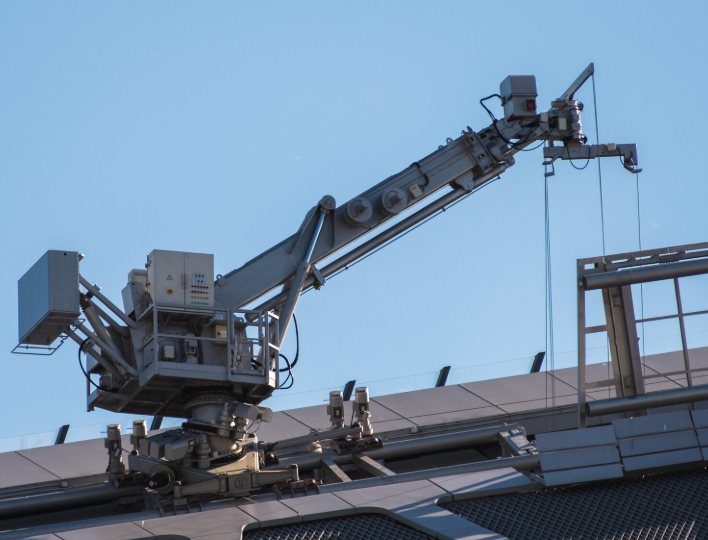
A building maintenance unit (BMU) Singapore system is a permanent access system designed to help trained maintenance personnel reach exterior areas of a high-rise building.
A typical BMU may feature roof-mounted equipment, suspension components, hoists, wire ropes, a suspended platform or cradle, controls, and safety mechanisms. The exact configuration depends on the building’s height, roof layout, facade design, access points, and maintenance requirements.
Rather than relying solely on temporary access equipment, a BMU can form part of the building’s long-term maintenance infrastructure. A properly planned system gives maintenance teams a practical way to reach areas that would otherwise be difficult to access.
Typical BMU applications include:
- Window and glass facade cleaning
- Exterior facade inspections
- Glass replacement
- Minor facade repairs
- Painting and coating work
- Building condition assessments
- Routine high-rise exterior maintenance
The supplied Groxx materials show building maintenance equipment alongside fall arrest systems, reflecting a service approach that connects facade access with worker safety.
Why BMU Systems Matter for High-Rise Properties
High-rise buildings can have extensive glass surfaces, architectural features, recessed sections, ledges, corners, and other areas that require regular attention. Facility teams need dependable access to perform routine work without creating unnecessary operational difficulties.
A building maintenance unit (BMU) Singapore system can provide a dedicated method for reaching exterior surfaces from roof level.
A suitable BMU can help maintenance personnel:
- Reach upper-level facades
- Move along designated maintenance areas
- Position workers close to exterior surfaces
- Support recurring facade cleaning
- Assist with inspection and repair work
- Reduce dependence on temporary access arrangements
The system must still be properly designed, installed, operated, inspected, and maintained. A BMU is part of a larger building maintenance strategy rather than a standalone answer for every working-at-height requirement.
How Does a Building Maintenance Unit Work?
A building maintenance unit (BMU) Singapore system generally combines several mechanical and structural components to provide controlled access along a building facade.
The exact configuration varies from one property to another, but the main operating concept remains straightforward.
Roof-Level Equipment
Many BMU systems are positioned at roof level. The equipment may travel along designated routes or remain positioned at a specific access location, depending on the building design.
Roof-level planning must account for available space, structural support, access routes, equipment storage, maintenance requirements, and facade geometry.
Suspended Cradle or Platform
A suspended cradle gives maintenance workers a working platform close to the facade. It can support routine tasks such as window cleaning, inspections, and selected repair activities.
Platform design should match the building’s maintenance requirements and the intended operating conditions.
Hoisting and Movement Systems
Hoists control vertical movement, allowing the platform to move upward or downward along the facade. Some BMU configurations also support horizontal movement, helping operators reach different sections of a building.
Movement controls and safety systems require proper inspection and servicing so equipment remains ready for its intended application.
Ropes, Cables, and Rigging Components
Suspension ropes, cables, connectors, and related hardware play an important role within the overall access system.
Component compatibility matters. Equipment should be selected according to the system design, manufacturer specifications, loading requirements, and applicable safety requirements.
Groxx Gears’ broader industrial offering includes rigging gears alongside fall protection and building maintenance systems, giving project teams access to related categories of high-rise safety equipment.
Key Components of a Building Maintenance Unit
A building maintenance unit (BMU) Singapore system can include several components that work together to support controlled facade access.
Roof Carriage or Traversing System
A roof carriage may allow the BMU to move along a designated path. This arrangement can provide access across different facade sections.
The roof structure and travel route must be assessed carefully before system selection.
Hoist System
The hoist controls vertical movement of the suspended platform. Its capacity and configuration should correspond with the intended platform, workers, equipment, and operating conditions.
Suspended Platform
The platform provides a working area for trained personnel performing facade maintenance. Its configuration should support the required tasks while allowing suitable worker movement and tool management.
Wire Ropes and Suspension Equipment
Wire ropes and suspension components carry significant responsibility during BMU operations. Their condition should be checked through appropriate inspection procedures, with damaged or unsuitable components removed from service.
Anchors and Fall Protection Equipment
A BMU should not be treated as a replacement for every type of personal fall protection.
Depending on the work arrangement, workers may require suitable harnesses, lanyards, anchor points, lifelines, connectors, or other fall protection equipment.
Groxx’s supplied materials highlight full-body harnesses, self-retracting lanyards, anchors and anchor points, horizontal lifelines, and vertical lifelines among its safety equipment categories.
Control and Safety Devices
BMU systems may feature operator controls and various protective mechanisms designed for controlled operation. The exact safety features depend on the equipment design and manufacturer.
Regular inspection and proper servicing remain essential for safe operation.
Common Applications of BMU Systems Across Singapore
A building maintenance unit (BMU) Singapore system can support many recurring tasks performed on high-rise exteriors.
Facade Cleaning
Glass towers require regular cleaning to maintain appearance and visibility. A suspended access platform can provide workers with controlled access to exterior glass surfaces.
This can be especially useful for properties with extensive curtain wall systems or complex facade designs.
Glass Replacement and Repair
Damaged glass panels may require access from outside the building. A suitable building maintenance system can give trained personnel access to selected facade areas for replacement and repair activities.
Material handling requires separate planning, especially when workers must handle heavy or fragile components at height.
Building Inspection
Exterior inspections can help identify visible damage, cracks, corrosion, sealant issues, damaged panels, and other facade concerns.
A building maintenance unit (BMU) Singapore system can give inspection teams closer access to exterior surfaces, helping them perform visual assessments where ground-level observation would not be sufficient.
Painting and Exterior Finishing
Certain facade refurbishment projects require workers to reach elevated surfaces for painting, coating, or finishing work.
A dedicated access platform can provide a practical working position for suitable tasks.
Preventive Building Maintenance
Regular maintenance can help property teams identify problems before they become larger repair projects.
A BMU can support recurring facade maintenance schedules, giving facility managers a permanent access method designed around the building’s exterior.
Why Safety Matters When Operating a BMU
High-rise facade work involves elevated positions, moving equipment, suspended platforms, ropes, tools, weather exposure, and other potential hazards.
A building maintenance unit (BMU) Singapore system should therefore form part of a carefully planned work-at-height strategy.
Working at Height Requires Careful Planning
Before work begins, project teams should assess the work location, facade conditions, access requirements, equipment configuration, weather conditions, emergency procedures, and worker competency.
A suitable work plan should identify potential hazards and establish appropriate control measures.
Fall Protection Should Work Alongside BMU Access
BMU equipment provides access, but personal fall protection may serve a separate safety function.
Depending on the work arrangement, workers may require:
- Full-body harnesses
- Energy-absorbing lanyards
- Self-retracting lifelines
- Horizontal lifelines
- Vertical lifelines
- Certified anchor points
- Connectors and carabiners
- Other compatible safety equipment
Groxx’s supplied visual materials feature a high-rise worker using a full-body harness and fall arrest connection, reinforcing the company’s focus on working-at-height safety alongside building maintenance solutions.
Equipment Inspection and Maintenance
Equipment should receive suitable inspections before operation and at scheduled intervals.
Inspection may cover:
- Wire ropes
- Suspension points
- Anchors
- Hoists
- Mechanical components
- Platform condition
- Controls
- Safety devices
- Fall protection equipment
Inspection findings should be documented, with defective components removed from service according to applicable procedures.
Worker Training and Competency
BMU operators should have suitable training and competency for their assigned duties.
Training should cover equipment operation, pre-use checks, emergency procedures, safe work practices, fall protection, and relevant site requirements.
What to Consider When Choosing a BMU System in Singapore
Selecting a building maintenance unit (BMU) Singapore solution should start with the building itself.
Building Design and Facade Configuration
Consider:
- Building height
- Roof layout
- Facade shape
- Building setbacks
- Recessed areas
- Corners
- Architectural projections
- Access points
- Areas requiring frequent maintenance
A system designed around the actual building can provide more practical access than a generic approach.
Maintenance Requirements
Consider the type and frequency of exterior work.
Does the property require frequent glass cleaning? Will maintenance teams perform regular facade inspections? Are glass replacement and repair activities expected? Will refurbishment projects require access to specific sections?
These questions can help determine the required BMU configuration.
System Capacity and Configuration
The selected system should match the intended operating requirements.
Project teams should assess:
- Number of workers
- Platform requirements
- Tools and equipment
- Material handling needs
- Travel requirements
- Building height
- Roof structure
- Facade configuration
Technical specifications should come from the equipment manufacturer and project engineering requirements.
Compatibility With Fall Protection Systems
A BMU should work alongside suitable fall protection equipment where required.
Anchors, lifelines, harnesses, lanyards, connectors, and related components must be suitable for the intended application.
Supplier Experience and Technical Support
A supplier should be able to discuss equipment selection, system requirements, installation coordination, inspections, servicing, and related safety equipment.
This can make a significant difference for complex high-rise projects.
BMU Systems and Fall Protection: Why Both Matter
A building maintenance unit (BMU) Singapore system and a fall protection system serve related but different functions.
The BMU primarily provides controlled access to the facade. Fall protection equipment helps protect workers from falls when the work arrangement calls for such protection.
A complete high-rise maintenance strategy may therefore involve:
- BMU access equipment
- Fall arrest systems
- Anchor points
- Horizontal lifelines
- Vertical lifelines
- Full-body harnesses
- Lanyards
- Rigging equipment
- Appropriate connectors
- Worker training
- Inspection and maintenance programs
Groxx’s industrial service materials present building maintenance systems alongside fall arrest systems, technical equipment, and other industrial categories.
This broad equipment approach can help project teams assess facade access and worker safety as connected parts of a high-rise maintenance program.
Why Work With a Specialist Building Maintenance System Supplier?
Choosing equipment for a high-rise property requires more than finding a product that appears suitable on paper.
Product Knowledge
A specialist supplier can help project teams understand the differences among access systems, fall protection products, rigging equipment, and related hardware.
Integrated Safety Equipment
A supplier offering multiple equipment categories can help teams review access and safety requirements together.
Groxx’s supplied materials describe services spanning industrial supplies, engineering solutions, workplace safety, and maintenance support for Singapore-based projects.
Technical Support
Technical guidance can help project teams identify equipment suited to building geometry, maintenance activities, and operational requirements.
Heavy-Duty Industrial Equipment
High-rise construction and maintenance can expose equipment to demanding conditions. Product quality, correct specification, inspection, and proper servicing all matter when selecting equipment.
Groxx Gears for High-Rise Building Maintenance
Groxx Gears is positioned as a Singapore provider of heavy-duty industrial solutions, covering fall protection, rigging gears, precision fasteners, and building maintenance systems.
Its building maintenance offering focuses on suspended access applications such as facade cleaning, glass replacement, and structural inspections.
For projects requiring a building maintenance unit (BMU) Singapore solution, Groxx Gears can serve as a point of contact for discussing high-rise access and related safety equipment requirements.
Building Maintenance Unit Maintenance and Inspection Tips
A BMU requires regular attention throughout its service life.
Inspect Before Every Operation
Operators should perform suitable pre-use checks before starting work. Visible defects, unusual equipment conditions, damaged ropes, faulty controls, or other concerns should receive proper attention before operation.
Follow the Manufacturer’s Maintenance Schedule
Manufacturer instructions should guide servicing and maintenance activities. Equipment records should be kept properly so facility teams can track inspections, repairs, and servicing.
Check Structural and Connection Points
Anchors, mounting points, suspension components, and related structural connections require suitable inspection.
Any concern regarding structural integrity should receive assessment from an appropriately qualified professional.
Keep Safety Equipment Ready
Harnesses, lanyards, lifelines, connectors, and anchor equipment should receive appropriate inspection.
Damaged equipment should not remain available for routine use.
Document Maintenance Activities
Good records can help facility managers track:
- Inspection dates
- Equipment condition
- Repairs
- Replacement components
- Servicing
- Operator observations
- Follow-up requirements
Building Maintenance Unit Singapore: Common Mistakes to Avoid
Facility managers and project teams should avoid several common BMU planning mistakes.
1. Selecting Equipment Without Assessing the Building
Every building has different facade characteristics, roof layouts, access points, and maintenance needs.
2. Treating a BMU as a Complete Fall Protection Strategy
Access equipment and fall protection serve different purposes. The complete work arrangement should be assessed before operations begin.
3. Ignoring Structural Support Requirements
Roof structures and equipment mounting points require proper assessment before installation.
4. Using Incompatible Rigging or Connection Hardware
Components should match the system requirements and manufacturer specifications.
5. Skipping Routine Inspections
Regular inspection can identify equipment concerns before operations begin.
6. Allowing Untrained Personnel to Operate Equipment
BMU operation requires appropriate knowledge, training, and competency.
7. Failing to Plan Emergency Procedures
Teams should know what action to take if equipment stops, a worker becomes unable to continue, or another emergency occurs.
8. Choosing Equipment Based Only on Purchase Price
A low initial price does not necessarily represent the best long-term option. Equipment quality, service support, maintenance requirements, compatibility, and expected operating conditions should also receive consideration.
How Groxx Gears Supports High-Rise Building Maintenance Projects
Groxx Gears focuses on heavy-duty industrial solutions designed for construction and maintenance environments.
Its broader product and service categories include building maintenance systems, fall protection equipment, rigging gears, precision fasteners, and high-rise safety equipment. The supplied brand material describes the company as a provider of equipment for demanding industrial environments across Singapore.
For building maintenance applications, Groxx’s offering includes suspended access solutions suitable for tasks such as:
- Facade cleaning
- Glass replacement
- Structural inspections
- Exterior building maintenance
The company’s service imagery also presents BUILDING MAINTENANCE SYSTEM alongside FALL ARREST SYSTEM, reflecting a practical focus on both facade access and worker protection.
For a property requiring a building maintenance unit (BMU) Singapore solution, the right starting point is a detailed assessment of the building, facade, maintenance tasks, access requirements, and safety provisions.
Need a building maintenance unit or high-rise access solution for your Singapore project? Speak with Groxx Gears about your building’s access, maintenance, and safety requirements.
Takeaway
A building maintenance unit (BMU) Singapore system can provide a practical access solution for high-rise facade cleaning, inspection, glass maintenance, repair, and other exterior building tasks.
The right system starts with the property itself. Building height, facade configuration, roof structure, access requirements, maintenance frequency, worker requirements, equipment capacity, and safety provisions should all be assessed before selecting a system.
A reliable BMU should also form part of a wider building maintenance and working-at-height strategy. Suitable fall protection, anchors, lifelines, harnesses, rigging equipment, inspections, training, and maintenance procedures can help create a safer working environment for high-rise maintenance teams.
Groxx Gears brings together building maintenance systems and related industrial safety equipment, supporting Singapore projects that require dependable high-rise access and worker protection solutions. Its supplied materials position the company around building maintenance, fall arrest systems, technical equipment, and industrial safety solutions.
For property owners, facility managers, contractors, and maintenance teams seeking a building maintenance unit (BMU) Singapore solution, careful system planning and specialist technical guidance can help establish a practical approach to long-term high-rise building maintenance.
Frequently Asked Questions About Building Maintenance Unit (BMU) Singapore
What is a building maintenance unit (BMU)?
A building maintenance unit is a permanent access system designed to help trained personnel reach exterior surfaces of high-rise buildings for cleaning, inspection, repair, glass maintenance, and related tasks.
What is a BMU used for?
A building maintenance unit (BMU) Singapore system can support facade cleaning, glass maintenance, exterior inspection, selected repair work, painting, and other high-rise maintenance activities.
How does a BMU work?
A BMU typically combines roof-level equipment, suspension components, hoists, ropes or cables, a suspended platform, and control systems. The exact arrangement depends on the building design and required maintenance activities.
Is a BMU the same as suspended scaffolding?
No. A BMU is generally planned as a dedicated building access system, while suspended scaffolding may refer to temporary access equipment. The appropriate option depends on building design, work requirements, project duration, and safety considerations.
Does a BMU replace fall protection equipment?
Not necessarily. A BMU provides access, while fall protection equipment serves worker protection functions. The complete work arrangement should determine which fall protection measures are required.
What should I consider when selecting a BMU supplier in Singapore?
Consider building design, facade configuration, maintenance requirements, system capacity, structural support, safety equipment, technical support, maintenance services, and supplier experience.
How often should a BMU be inspected?
There is no single inspection interval suitable for every system. Inspection and servicing should follow manufacturer requirements, applicable regulations, site conditions, equipment condition, and recommendations from competent personnel.
Can BMU systems support facade cleaning and glass replacement?
Yes, suitable suspended access systems can support facade cleaning and glass replacement when the equipment is correctly designed and appropriate for the building and task. Proper planning, trained personnel, suitable safety measures, and appropriate equipment are essential.