Modern construction projects depend heavily on durable materials that can support enormous structural loads while maintaining long-term reliability. Reinforced steel bars serve as the internal framework of reinforced concrete structures, giving buildings, bridges, roads, and foundations the strength required to withstand stress, pressure, and environmental forces. Because of this critical role, Reinforced Steel Bar Testing remains one of the most important quality control procedures within the construction industry.
Poor-quality reinforcing steel can compromise structural integrity, reduce load-bearing capacity, and increase the risk of premature structural failure. Construction projects therefore require strict material verification before steel bars are approved for use on-site. Reinforced Steel Bar Testing helps engineers, contractors, and project owners confirm that reinforcing steel meets required specifications, building standards, and safety requirements.
Inch-On Materials Testing Laboratory provides professional Reinforced Steel Bar Testing services using industry-standard procedures and calibrated testing equipment. The laboratory follows ASTM A370 standards to deliver accurate, dependable, and certified testing results for construction projects.
What Is Reinforced Steel Bar Testing?
Reinforced Steel Bar Testing refers to the mechanical evaluation of reinforcing steel bars used for concrete reinforcement. The process measures the physical and mechanical properties of steel to determine whether the material can safely perform under construction and structural loading conditions.
Steel bars used for reinforcement must possess the correct balance of strength, flexibility, ductility, and durability. Reinforced Steel Bar Testing verifies these characteristics through controlled laboratory procedures conducted by trained technical personnel.
Testing commonly includes:
- Tensile strength evaluation
- Yield strength measurement
- Elongation analysis
- Bend testing
- Ductility assessment
- Verification of steel grade requirements
Results obtained through Reinforced Steel Bar Testing help ensure that construction materials meet engineering design specifications and project requirements before installation.
Importance of Reinforced Steel Bar Testing for Construction Projects
Construction structures rely on reinforcing steel to resist tension forces that concrete alone cannot withstand. Without proper material testing, construction teams may unknowingly install substandard steel that could affect structural performance and safety.
Reinforced Steel Bar Testing plays a major role in:
- Confirming material quality
- Supporting structural reliability
- Meeting regulatory requirements
- Reducing construction risks
- Preventing material failure
- Supporting long-term durability
Testing also protects project owners from potential issues related to counterfeit or improperly manufactured steel products. Verifying steel properties before use can prevent expensive repairs, delays, and structural concerns later during the project lifecycle.
Large infrastructure projects, commercial buildings, residential developments, and industrial facilities all benefit from thorough Reinforced Steel Bar Testing procedures.
ASTM A370 Standard for Reinforced Steel Bar Testing
ASTM A370 serves as the internationally recognized standard for mechanical testing of steel products. The standard outlines testing procedures, specimen preparation, equipment requirements, and reporting methods used for steel evaluation.
Inch-On Materials Testing Laboratory performs Reinforced Steel Bar Testing following ASTM A370 procedures to ensure reliable and standardized results.
ASTM A370 testing procedures help maintain consistency across laboratories and construction projects by establishing uniform testing requirements. This standard allows engineers and project managers to confidently compare test data and verify compliance with project specifications.
ASTM A370 procedures commonly cover:
- Tension testing
- Yield strength determination
- Elongation measurement
- Bend testing
- Mechanical property evaluation
Following recognized testing standards strengthens confidence within the construction process and supports regulatory compliance.
Key Mechanical Properties Evaluated During Reinforced Steel Bar Testing
Tensile Strength
Tensile strength measures the maximum amount of stress that reinforcing steel can withstand before breaking. This property indicates the steel’s ability to resist pulling forces during structural loading conditions.
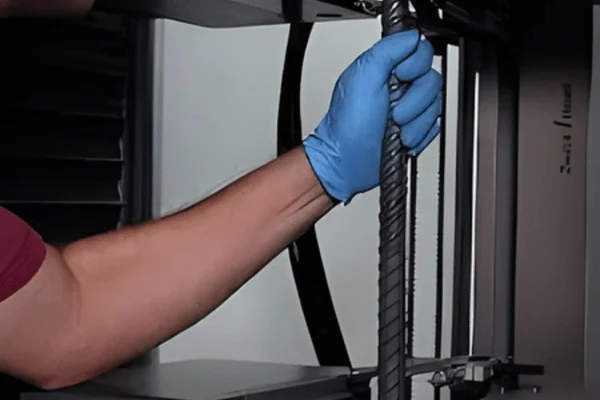
Reinforced Steel Bar Testing evaluates tensile strength using calibrated Universal Testing Machines (UTM). The steel specimen is subjected to increasing force until failure occurs. Results help engineers determine whether the material satisfies project requirements and applicable standards.
High tensile strength remains essential for reinforced concrete structures exposed to heavy loads and demanding service conditions.
Yield Strength
Yield strength identifies the point at which reinforcing steel begins to deform permanently under stress. Once steel exceeds its yield point, it cannot return to its original shape.
Reinforced Steel Bar Testing measures yield strength to ensure reinforcing steel possesses sufficient resistance against permanent structural deformation. This property significantly affects building stability and structural safety.
Construction projects often specify required yield strengths such as Grade 60 or Grade 75 reinforcing steel. Proper testing verifies compliance with these requirements.
Elongation
Elongation measures how much reinforcing steel can stretch before fracture occurs. This property reflects the flexibility and deformation capability of the material under stress.
Reinforced Steel Bar Testing includes elongation analysis because structures often experience movement caused by loading, settlement, vibration, wind, or seismic activity.
Steel with acceptable elongation properties can absorb stress more effectively without sudden failure, helping structures maintain stability under changing conditions.
Ductility
Ductility refers to the ability of reinforcing steel to deform under stress without fracturing. Materials with good ductility provide warning signs before failure and can absorb energy more effectively.
Reinforced Steel Bar Testing evaluates ductility performance to support safer structural behavior, particularly for buildings located within earthquake-prone areas.
Ductile reinforcing steel contributes significantly to structural resilience and seismic resistance.
Equipment Used for Reinforced Steel Bar Testing
Accurate testing requires advanced laboratory equipment capable of producing dependable and repeatable results. Universal Testing Machines play a central role during Reinforced Steel Bar Testing procedures.
Universal Testing Machines apply controlled tensile force to reinforcing steel specimens while monitoring:
- Applied load
- Deformation behavior
- Elongation
- Failure point
- Stress response
Calibrated testing equipment helps ensure precise measurements and consistent results. Proper equipment maintenance and calibration remain essential for accurate Reinforced Steel Bar Testing outcomes.
Laboratory technicians also follow controlled testing procedures to minimize variables that could affect result accuracy.
Grade Verification Through Reinforced Steel Bar Testing
Construction specifications often require reinforcing steel bars with designated grades based on project design requirements. Steel grades indicate specific mechanical properties such as yield strength and tensile capacity.
Reinforced Steel Bar Testing helps confirm that delivered steel materials match supplier documentation and mill certificates.
Grade verification procedures help identify:
- Incorrect steel grades
- Material inconsistencies
- Manufacturing defects
- Non-compliant products
- Counterfeit materials
Verifying steel grades before installation helps construction teams avoid structural problems and maintain compliance with engineering requirements.
Projects requiring high-strength reinforcement particularly benefit from independent Reinforced Steel Bar Testing services.
Reinforced Steel Bar Testing for Seismic Safety
Structures located within earthquake-prone regions require reinforcing steel capable of handling movement, vibration, and cyclic loading conditions. Reinforced Steel Bar Testing supports seismic safety by evaluating elongation and ductility properties.
Steel reinforcement within seismic zones must possess sufficient flexibility to absorb structural movement without brittle failure. Materials lacking proper ductility may crack or fracture during seismic events, increasing structural risks.
Reinforced Steel Bar Testing helps engineers determine whether reinforcing steel can provide the necessary deformation capacity required for earthquake-resistant construction.
Detailed elongation and ductility reports also support compliance with seismic design standards and building regulations.
Benefits of Professional Reinforced Steel Bar Testing Services
Professional Reinforced Steel Bar Testing services provide several important advantages for construction projects.
Improved Construction Quality
Independent laboratory testing confirms material quality before steel installation begins. This process strengthens overall construction quality assurance efforts.
Reduced Structural Risks
Testing helps identify weak or defective reinforcing steel before it becomes part of the structure. Early detection reduces long-term structural concerns.
Regulatory Compliance
Construction projects often require documented material testing for regulatory approval and inspection purposes. Reinforced Steel Bar Testing supports compliance with applicable standards and project requirements.
Faster Project Approval
Certified laboratory reports allow contractors and engineers to quickly approve reinforcing steel for construction use, helping maintain project schedules.
Reliable Documentation
Detailed testing reports provide documented proof of compliance and material performance, supporting engineering records and project documentation.
Laboratory Testing Services for Construction Materials
Inch-On Materials Testing Laboratory provides laboratory testing services for soil and construction materials using modern testing equipment and standardized procedures.
Laboratory testing services help evaluate whether construction materials meet required specifications and quality standards. Accurate laboratory testing supports safer structures, stronger foundations, and improved long-term performance.
Testing services commonly support:
- Commercial construction
- Residential developments
- Industrial facilities
- Infrastructure projects
- Government construction works
Reliable laboratory analysis remains essential for maintaining construction quality control throughout project execution.
Field Testing Services for Construction Projects
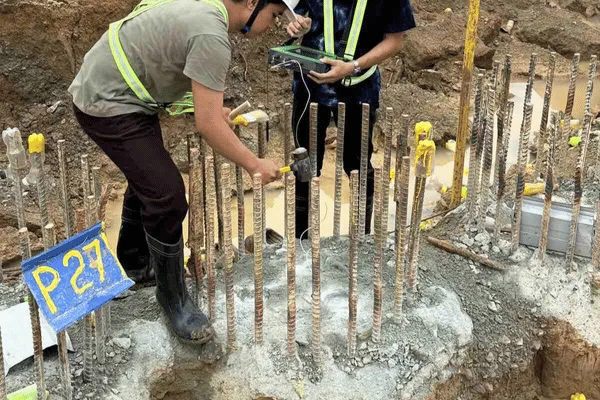
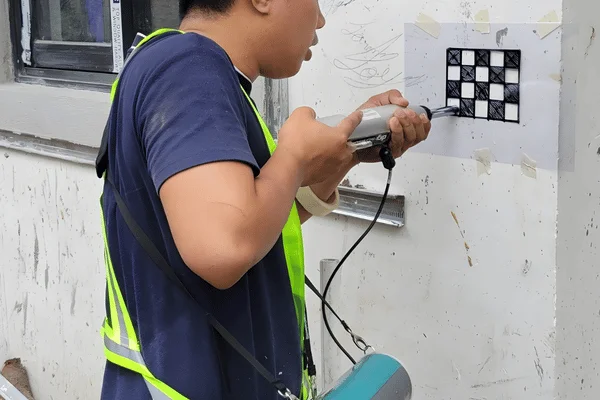
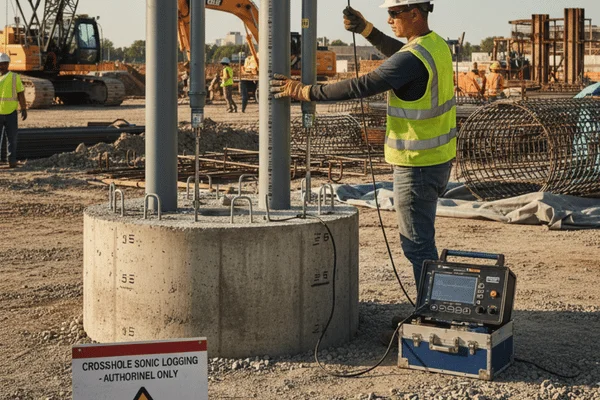
Field testing services involve on-site evaluation of soil, concrete, and foundation conditions directly at construction locations.
Inch-On Materials Testing Laboratory conducts field testing procedures using specialized equipment and recognized testing standards.
Field testing services help assess:
- Ground conditions
- Foundation performance
- Concrete quality
- Structural behavior
- Site conditions
Combining field testing and Reinforced Steel Bar Testing allows construction teams to maintain comprehensive quality assurance across multiple project components.
Why Choose Inch-On Materials Testing Laboratory for Reinforced Steel Bar Testing?
Choosing a qualified laboratory for Reinforced Steel Bar Testing significantly affects the accuracy and reliability of testing results.
Inch-On Materials Testing Laboratory offers dependable construction material testing services supported by industry-standard procedures and technical expertise.
Key advantages include:
- DPWH-BRS accreditation
- ASTM and AASHTO standard compliance
- Calibrated testing equipment
- Experienced technical personnel
- Accurate and certified reports
- Fast turnaround times
- Reliable quality assurance support
The laboratory remains committed to helping construction projects maintain safety, compliance, and material quality through professional testing services.
Takeaway
Reinforced Steel Bar Testing serves as a critical component of construction quality assurance and structural safety. Proper testing verifies that reinforcing steel possesses the mechanical properties required to support long-term structural performance under demanding conditions.
Mechanical evaluation procedures such as tensile strength testing, yield strength measurement, elongation analysis, and ductility assessment help ensure reinforcing steel meets project specifications and recognized industry standards.
Construction projects that invest in professional Reinforced Steel Bar Testing gain stronger quality control, reduced material risks, improved regulatory compliance, and greater confidence within structural performance.
Inch-On Materials Testing Laboratory continues to provide reliable Reinforced Steel Bar Testing services following ASTM A370 standards to support safer and more dependable construction projects.
Frequently Asked Questions About Reinforced Steel Bar Testing
What is Reinforced Steel Bar Testing?
Reinforced Steel Bar Testing refers to the mechanical evaluation of reinforcing steel bars used within concrete structures. The process measures properties such as tensile strength, yield strength, elongation, and ductility.
Why is Reinforced Steel Bar Testing important?
Reinforced Steel Bar Testing helps verify material quality, structural safety, and compliance with engineering specifications and construction standards.
What standard is used for Reinforced Steel Bar Testing?
ASTM A370 serves as the standard procedure commonly used for mechanical testing of steel products.
What equipment is used during Reinforced Steel Bar Testing?
Universal Testing Machines (UTM) are commonly used to apply controlled force and measure steel performance during testing.
What properties are checked during Reinforced Steel Bar Testing?
Testing commonly evaluates:
- Tensile strength
- Yield strength
- Elongation
- Ductility
- Bend performance
Why is ductility important for reinforcing steel?
Ductility allows reinforcing steel to deform under stress without sudden fracture, which supports safer structural performance during earthquakes and heavy loading conditions.
Can Reinforced Steel Bar Testing verify steel grades?
Yes. Reinforced Steel Bar Testing helps confirm whether reinforcing steel matches specified grades such as Grade 60 or Grade 75.
Who should perform Reinforced Steel Bar Testing?
Accredited construction materials laboratories with calibrated equipment and trained personnel should perform Reinforced Steel Bar Testing to ensure reliable and certified results.